
It has been 5 weeks since my last post. My routine of reflecting each week was disrupted by climbing a mountain and it has taken until this weekend to feel that I am back to normal life.
5 weeks is a long time in the death throes of internationalist liberal democracy.
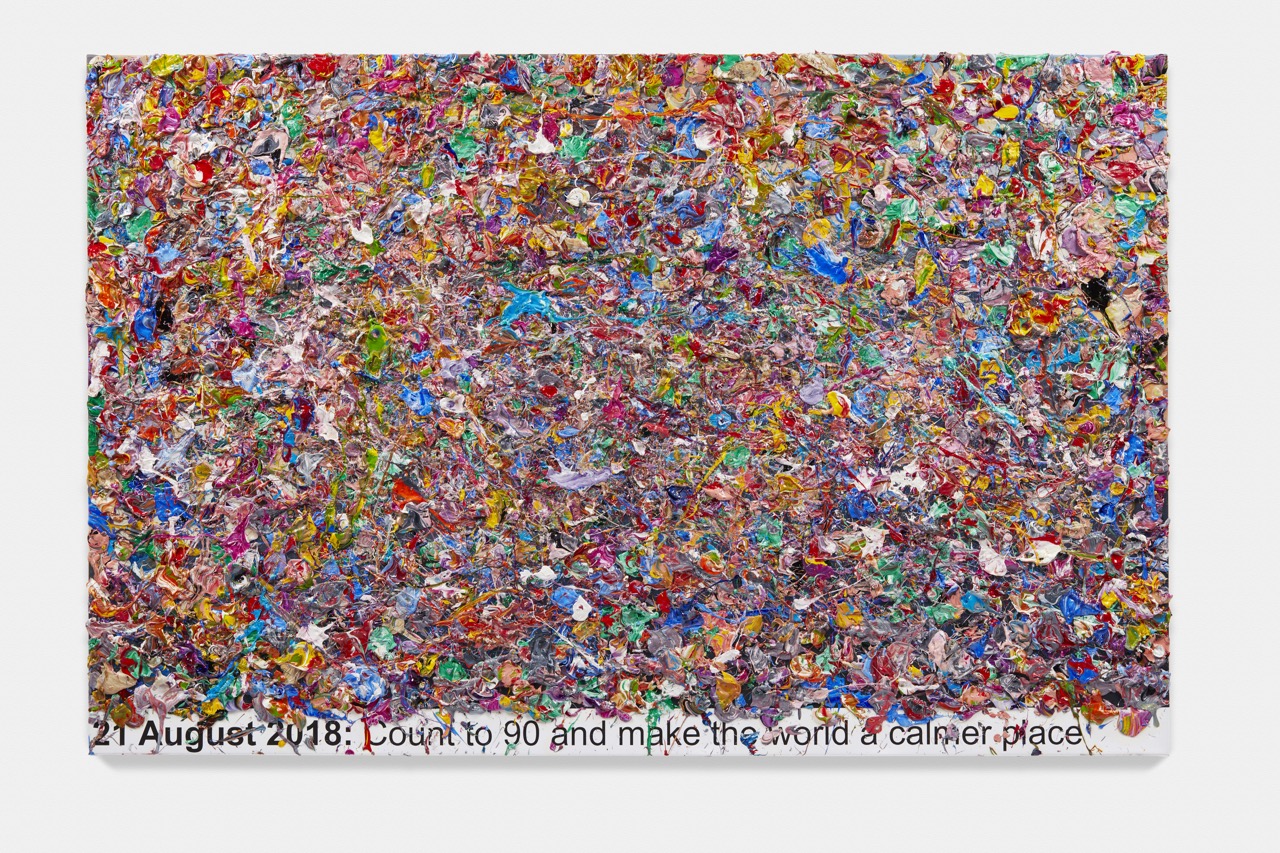
The Mountain: anything I say about the experience of climbing Kilimanjaro seems too small, too pale, too thin. It was vibrant, and giant. It was incredible. It’s rare I do something truly challenging. As we get older, most of us spend more time in our comfort zones. Comfort zones are nice. But this was a reminder that challenges are exhilirating and horizon expanding. I was astounded by the effects of altitude and developed greater empathy for my patients who are breathless doing normal activities: tying their shoes or walking to the bathroom. I was mesmorised by the beauty and wonder of nature, especially at the peak: the sun hitting untouched snow, the glaciers, the timelessness of the views will all stay with me. I was so grateful for the opportunity to step outside life for a brief moment, and just be.
Great things are done when men and mountains meet;
This is not done by jostling in the street.William Blake
Most of all I was thankful for the unwavering support of ten wonderful women, and reminded that we can achieve the seemingly impossible if we all lift as we climb.
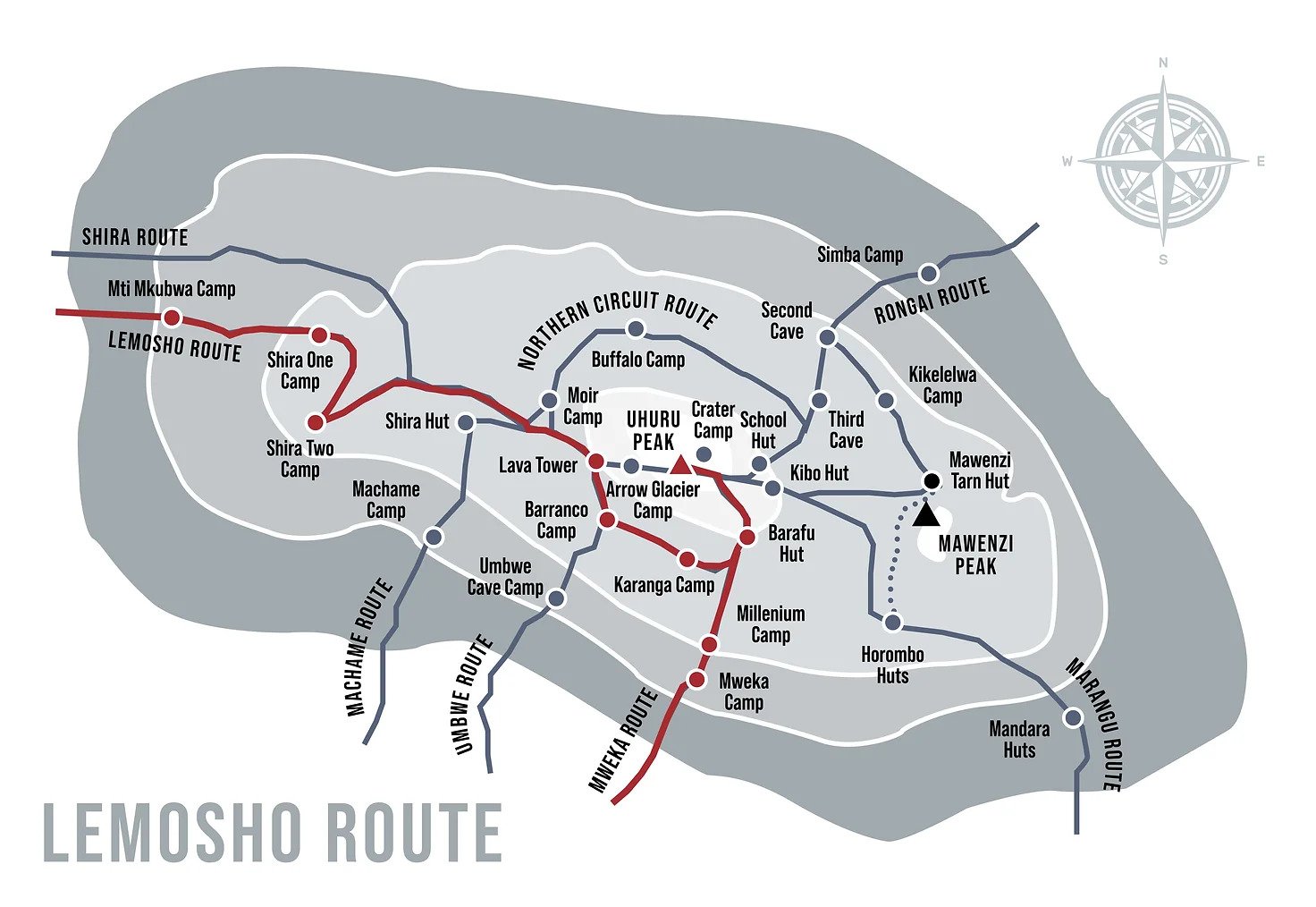
We all made it to the end of the Lemosho route, all the way to the top, Uhuru peak, which was far from guaranteed as altitude sickness hit us one after another. We tested our bodies to their limits, and found the power of our minds was greater than we would have believed. When my tired, cold body told me to stop and lie down, concentrating on just taking the next step was surprisingly effective. This became a form of meditation at 4am on summit night when daylight was still hours away. Next step, next step, next step… You can travel far by taking one step at a time.
We raised over £10,000 for Samaritans and Women’s Aid, helping to lift others facing their own challenges.

I would strongly recommend 360 expeditions (UK based) and Ahsante Tours (Tanzanian) who were a great combination of professional, expert, friendly and caring. The Ahsante team also fed me very well, catering for a plant-based diet without skimping on taste, nutrition or variety! We have shared other tips (on everything from training and snacks, to period products) on our instagram page @kili_girls_diaries.
Relaxation: After the mountain I rested my weary muscles for a few days in the sun and sea of Zanzibar. It was the most beautiful place and I got my wildlife fix with Giant Tortoises on Prison Island, and monkeys in the Rainforest and on a spice garden tour.
Home: it’s a cliche, but “it’s very nice to go trav’ling, but so much nicer to come home.” I missed P___ a lot, especially on the difficult days. We haven’t spent more than a week apart since pre-pandemic. Independence is highly valued in magazine articles and self help books, but I really like our interdependence. Our lives are intertwined, and it’s the daily physical contact, conversations about everything and nothing, and shared routines that I love about life together. When I was single it was this living alongside someone that I always felt was missing. There’s something so reassuring about someone: who likes you despite your flaws; who knows how you take your tea, and that you talk in your sleep; and who won’t watch the last episode of Severance without you.
Since we had renovations last year, home is also a lovely place to be. It’s full of pictures which evoke memories, furniture we’ve found or fixed up, books and CDs from charity shops and markets, and a growing collection of woven things. I love our kitchen. It has a view of the garden (the first I’ve ever had), where flowers bloom and birds, cats and foxes visit. And it’s where the best food I’ve ever eaten is made (by P___). Having rented until my 40s I really value the stability of having a home no-one can throw me out of on a whim. A home is more than bricks, more than an asset; it is safety, warmth, health and love.
The End of democracy: I did not look at the news whilst I was away. So it was a bit of a shock on returning home to learn of all the chaos. P__ had made a list of things to tell me about, too many of which featured fascism and a destabilisation of world order as we once knew it. I no longer know how to feel about world events. I am simultaneously stressed, angry, resigned, despairing, energised, exasperated and empty.
COVID-19: it’s been 5 years since the COVID pandemic hit, and disrupted all our lives. I listened to an epidode of Oh God What Now, in which Dorian Lynsky, Marie Le Conte and others discussed what surprised them about what changed, and what didn’t, post-pandemic. COVID feels like a parallel timeline: familiar and recognisable, but also so far removed from, and somehow discontinuous with, life today. It’s like someone took some film and cut a section out, leaving a fracture in the images where the film was stuck back together. I remember for a brief moment thinking that community, collective care, and living more lightly on the Earth could become the norm. I got whiplash as we rapidly snapped back into individualism, consumption, destruction and alienation.

Work: I had a week back at work, wading through my email inbox and working out which messges were already irrelevant (many) and which actually needed my input (too many). A side effect of having three weeks off is that my tolerance for the mad way in which we are forced to work because everything is broken, has been lost.
Everything is broken.
Nothing Wes Streeting has said gives me any hope that this will change. Dismantling NHS England is a distraction that will divert time and energy from tackling the real issues facing health and social care. None of my patients waiting for procedures or appointments, struggling to get a GP appointment, in need of paid carers, or unable to access support to improve their physical or mental health, will feel any benefit. Many of them will, however, feel the impact of cutting benefits such as PIP. Polticians are so far removed from the reality of people’s lives. Labour seems to have no moral compass and be intent on deepening the scars of austerity. The gaping chasm between the rich and the rest of the population should be a source of deep shame amongst the Cabinet, and a guidling light for their policy agenda.
A growing number of diverse voices are calling for a wealth tax, to shoulder the burden on those with the broadest shoulders. The Green Party manifesto called for a tax of 1% annually on assets over £10 million and 2% on assets above £1bn. Let’s be clear, the 1% of the population who would pay this would not even feel it, but the money raised would lift children out of poverty, fund schools and hospitals, pay care workers, generate jobs in clean energy, and ensure pensioner’s could heat their homes. Keir Starmer’s Labour is indistinguishable from the Tories, and Rachel Reeves can tell us that this is not austerity as many times as she likes: we see and feel reality.
Many trains: I set off on my travels again, this time only as far as Belfast and Lyon, to attend medical conferences. They happened to be in the same week, two expanses of water and a land mass apart. And since I will not fly when there is a reasonable alternative, I embarked on a week of many trains, and some ferries. As ever, The Man in Seat 61 was a great help. I caught a train from Euston to Liverpool, then a metro to Birkenhead to get the Stena Line overnight ferry. I booked a cabin so slept very well and arrived in Belfast well rested and ready for the conference. Our confernece poster on the value of a Mental Health specialist nurse to support patients on the Lung Cancer pathway was one of 5 winners, and my presentation generated lots of interest. This is a rare example of a new service that has had a meaningful impact on reducing health inequalities and has not been cut the second the pilot is over. I am so proud of this project, a rare success in a career littered with failed ideas, proposals and funding bids. The problem is that none of my proposals promise a ‘return on investment’ in a way that easily be counted in £ and p. This one success will keep me fighting. But as someone quipped “It’s the hope that kills you.”
To travel from Belfast to Lyon I took the overnight ferry back to Liverpool, got a train to Chester, then changed for a train to Euston. I took a short walk in the sun to St Pancras, had a nice lunch, and got on the Eurostar to Paris. In Paris I took the metro from Gare Du Nord to Gare de Lyon and settled into the TGV to Lyon, arriving in time for dinner. It was all very smooth and relaxing and I did some train crafting along the way. Train travel is far more luxurious than flying. More people would take the train if wasn’t so comparatively expensive but the aviation industry is one of the most undertaxed and overly subsidised sections of the UK economy. There is no VAT on plane tickets and no tax on aviation fuel. The UK government gives the aviation industry >£7 billion in subsidies. This is not mirrored in much of Europe. And their trains are also nicer.

I really enjoyed Lyon especially the area around La Croix-Rousse. I climbed both hills and was rewarded by great views. Lyon is known for it’s gastronomy and it lived up to expectations at Brocoli, a small restaurant of just 20 covers a night, where I had the chef’s selection 5 course menu.
I gave a talk titled: ‘Plastics in Healthcare: rethinking medical device innovation and disposal in a world addicted to plastic’ which interested and scared people just about the right amount. Plastic production has rapidly increased over the last 70 years. In 1950, the world produced just two million tonnes. It now produces over 450 million tonnes. Plastic fragments have been found in the most untouched parts of the globe, including the peak of Everest and the depths of the Marinara Trench. Two studies on microplastics and human health are worth reading:
- Nihart, A.J., Garcia, M.A., El Hayek, E. et al. Bioaccumulation of microplastics in decedent human brains. Nat Med (2025). https://doi.org/10.1038/s41591-024-03453-1 showed that “On average, microplastic levels were about 50% higher in brain samples from 2024 than in 2016 samples. And brain samples contained up to 30 times more microplastics than samples from a person’s liver and kidneys.” Not only this “even greater accumulation of MNPs was observed in a cohort of decedent brains with documented dementia diagnosis, with notable deposition in cerebrovascular walls and immune cells.” Of course correlation is not causation, but I am concerned that my brain is full of microplastics and it may be increasing my risk for dementia.
- Marfella, Raffaele, et al. “Microplastics and nanoplastics in atheromas and cardiovascular events.” New England Journal of Medicine 390.10 (2024): 900-910 which showed that in patients who had their carotid artery removed, those who had a higher concentration of microplastic nanoparticles in their carotid artery plaque were at higher risk of a having a heart attack, stroke, or dying from any cause up to 3 years later.
Silence on Gaza: The ceasefire in Gaza lasted just 42 days, less than 5 weeks. At least 400 Gazans were killed on day 1 of the strikes, in one of the deadliest days of an already savage war. My social media feeds are full of pictures of dead babies and children. Of course, the ceasefire was never going to last. Netanyahu says fresh Israel strikes on Gaza are ‘just the beginning’. ‘Nothing will stop us from achieving all our war aims’ which are the destruction of not only Gaza, but of the Palestinian people. Netenyahu knows that despite the genocide being documented, and watched live, the international community is either weak or complicit, or both. Healthcare workers have been held and tortured in Israeli detention, but many have continued to work in Gaza despite this threat. Now, Israeli authorities have blocked healthcare workers from entering.
It is the month of Ramadan, a time of fasting, communal prayer, reflection, and community. Instead of finding joy together in Iftar meals, families in Palestine are mourning their dead. Children are crying in hunger and fear. If only the world could reflect on our complicity in their pain and make it stop.

Photograph: Omar Al-Qattaa/AFP/Getty Images – from The Guardian: The week around the world in 20 pictures.
Donate to a displaced family. Be their lifeline.

 drlj
drlj 