

I had a relatively quiet week at work, off the wards, so tackled my to-do list. It’s a long list. I chose my least favourite task, writing the ward rota for the Respiratory Consultants. Why is a Consultant doing this tedious task, you may ask? This is a symptom of more than a decade of underinvestment in the NHS and the false economy of cuts, and more cuts, to a dwindling admin support team, resulting in more and more tasks being piled onto the clinical workforce. It would have been unthinkable to expect a Consultant to write a rota ten years ago. From a public and organisational perspective, it makes no sense to have employees who are paid well for their expertise and experience, performing admin tasks. Whilst I wrestle with excel spreadsheets, and attempt to solve hierarchical constraints problems, I am not delivering or improving patient care. Not only this, an undervaluing of admin in the NHS has led to low staff retention and poor patient experience. False economy is a feature of the modern NHS. Next time a politician talks about ‘cutting backroom staff’, remember that the work of the backroom does not go away, it just lands on the desk of the front line staff.
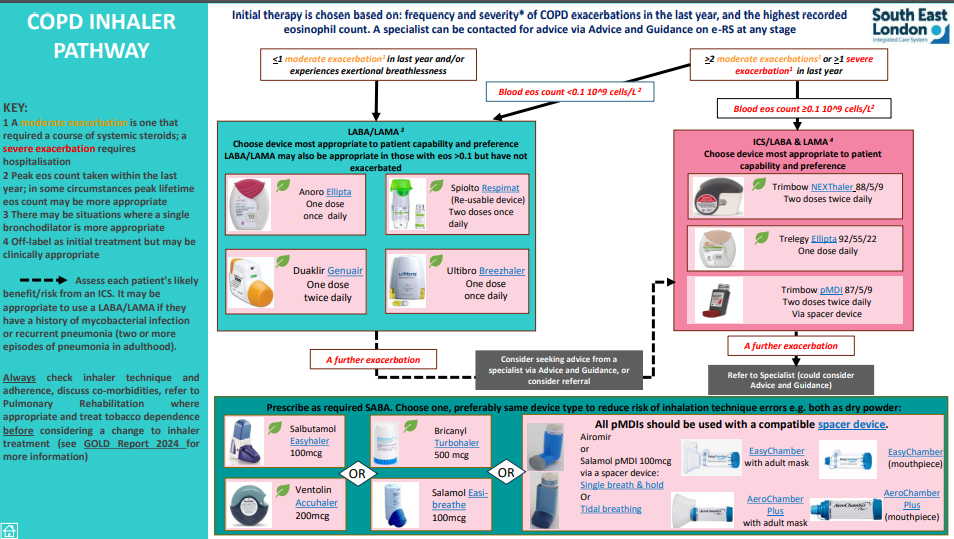
I co-hosted a webinar on our new South East London COPD guidelines. They have taken many months to produce, have been a true collaborative effort and are the bedrock of our work improving the care and outcomes for people living with COPD. They have been written by overworked people in stolen lunch breaks, and late evenings. And our webinar was at 7pm and was well attended. It’s amazing how much commitment there is to good care, despite the many barriers.
I recently published an article ‘Why is the medical profession reluctant to talk about diet change?’ cowritten with Dr Shireen Kassam. We argue that “embracing plant-based diets is now an ethical imperative, with benefits spanning individual health, environmental sustainability, equitable resource distribution and global health justice”. We make recommendations for how healthcare can lead the transition we need. We’ve had positive feedback from colleagues and those involved in policy. I hope it serves as a resource to others trying to move the dial on healthy eating in healthcare. It’s a dial that seems very resistant to movement.
I listened to an episode of the Freakonomics podcast ‘On Broadway, Nobody Knows Nothing‘ which explored the economics of Broadway and theatre in general. There were interesting discussions on what makes a hit, the unpredictability of a flop, and the value of high school productions, but most interesting was the insight that, as in every other capitalism infected art genre, landlords always win. The episode inspired me to look at what is coming up in London’s theatre scene, and to book some tickets.
I’ve been trying out Speechify, a text to speech application. It’s very useful for reading academic texts and allows me to craft while listening. Annoyingly, it doesn’t seem to be able to deal with dates. The creators appear to have spent more time on gimicks (I do not need Gwyneth Paltrow or Snoop Dogg to read Rousseau to me) than on key functions. If anyone has found a way to fix this let me know.
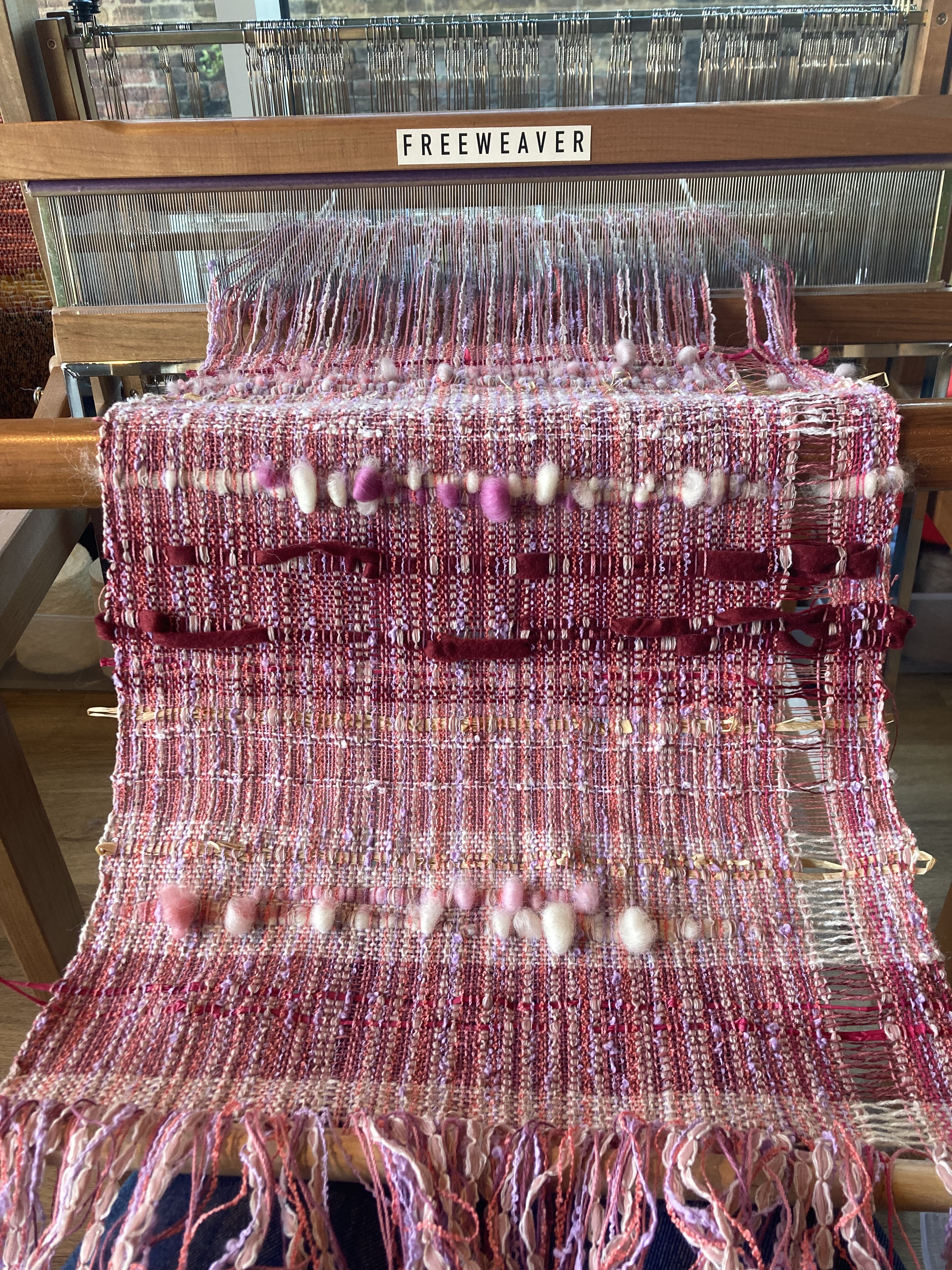
I worked Good Friday, but had a three day weekend, and on Saturday went to the weaving open studio. I wove a wall hanging for my Mum, using a warp inspired by the cherry blossom, incorporating felt and raffia. I haven’t been on the loom since before I left for Kilimanjaro. It was great to be back.

P___ made vegan sourdough hot cross buns. They were divine. I ate one whilst he read out excerpts from an LRB article Unfair Judgements by Ed Kiely. The article is a review and exploration of a meticulously researched book by John Pring, The Department: How a Violent Government Bureaucracy Killed Hundreds and Hid the Evidence. It documents the violence of the DWP, and the process by which austerity has killed disabled people. The individual stories are shocking. So too are the quotes from politicians, and civil servants. I have often wondered how the Work Capacity Assessments were constructed and how they wre allowed to be outsourced to non-clincial profit making companies. I have also wondered how any doctor could being themself to be invlved in the process. I learned that the architect of this particular dehumanising beaurocracy was a former GP, Mansel Aylward. Obituaries laud him as a ‘compassionate and inspirational leader.‘ His Wikipedia entry takes a more balanced, view, noting a lack of scientific research skills, and questionable financial influences.
The article reminded me of the Deaths by Welfare project by Healing Justice Ldn. The project “investigates deaths linked to welfare reform and welfare state violence …(and)… aims to make visible the slow and bureaucratic violence of the State. Our work honours, uplifts and learns from disabled people’s lived experience and resistance.” It’s an excellent resource. I learned that John Pring was a co-creator of the project and its’ timeline. The world of fighting state violence, with and for disabled people, is small.
We watched a great film, If Only I Could Hibernate about family, poverty, and the promise of education. It’s the only Mongolian cinema I’ve ever seen. It was excellent.
Some members of my choir sang This Joyful Eastertide for Easter Sunday. It was a small group as many people were out of London for the weekend. I knew I’d be one of only two Altos so I thought I’d better practice my part. My sight reading is less than brilliant. Youtube thankfully had some practice tracks. It’s such as great musical resource, especially for choirs. We sounded very joyful ( a little like this)!
I pre-ordered “We Are Not Numbers: the voices of Gaza’s youth”. The book arrived this week. It’s sitting on my desk. I haven’t been able to open it yet. Dr Refaat Alareer, a poet and professor of comparative literature and creative writing mentored and inspired many contributors before his murder by an Israeli strike on December 9th 2023. His poem, If I must die, is agonisingly moving. I’m not sure I can bear a whole book of such beauty.

If I must die
you must live to tell my story
to sell my things
to buy a piece of cloth and some strings (make it white with a long tail)
so that a child, somewhere in Gaza
while looking heaven in the eye awaiting his dad who left in a blaze —
and bid no one farewell
not even to his flesh
not even to himself —
sees the kite, my kite you made
flying up above
and thinks for a moment
an angel is there
bringing back love
If I must die
let it bring hope
let it be a tale
Donate to Osama and his family, Medical Aid for Palestinians or Palestinian Action today.

 drlj
drlj 