Tag Archives: Mental health

On revolutionary medicine

On Thursday I spent the evening on Hampstead Heath with a group of people brought together by an organiser in Medact. We met to sit in the sun, share a picnic and discuss Che Guevara’s speech to recruits of a new post-revolution training program at Cuba’s Ministry of Public Health. On revolutionary medicine, is both specific to a time and place, and timeless in it’s analysis of how society defines, creates and sustains health or, more often, fails to do so.
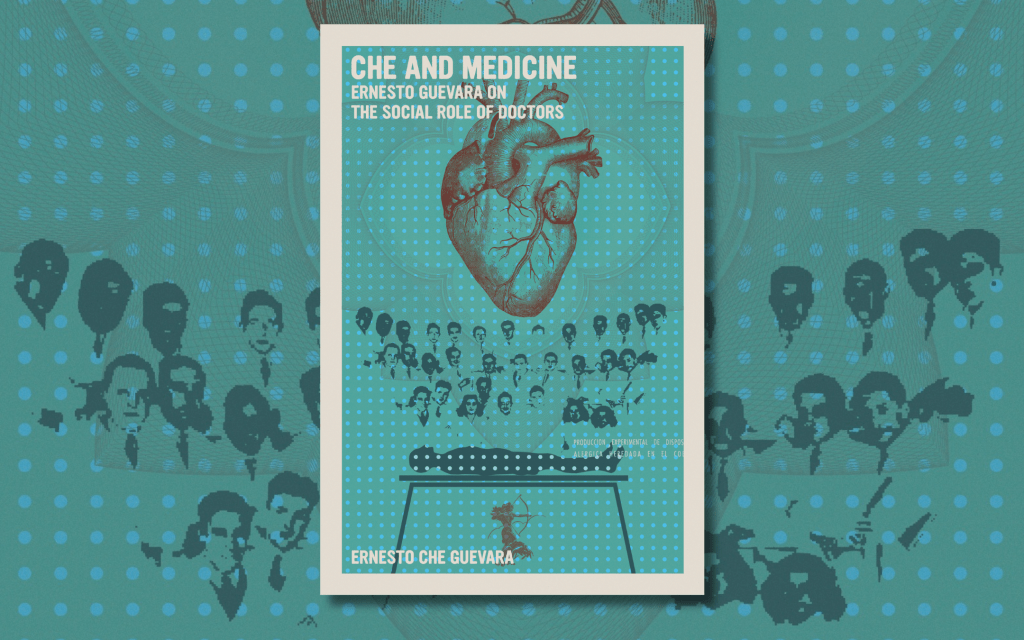
‘Che and Medicine’ is a collection of his writings on medicine from Seven Stories Press. It argues for a collectivized health system and the integration of every health worker into the revolutionary movement.

Che was born premature, had pneumonia as an infant, and suffered with difficult to control asthma throughout his life. He had extended periods off school when his mother would home-school him. Rather than accept chronic illness, Che looked for ways to support his body to heal. He altered his diet, fasted, and pushed himself to be physically active outdoors. He adopted the principles of Lifestyle Medicine intuitively and saw the benefits, years before the evidence base would catch up and I would complete a diploma with the International Board of Lifestyle Medicine. Che’s personal experiences heavily influenced his later vision of a Cuban health system, but he wisely saw the limits of individual action, and the need for a collective community-based approach to health.

Continue reading
Hopeless/ful

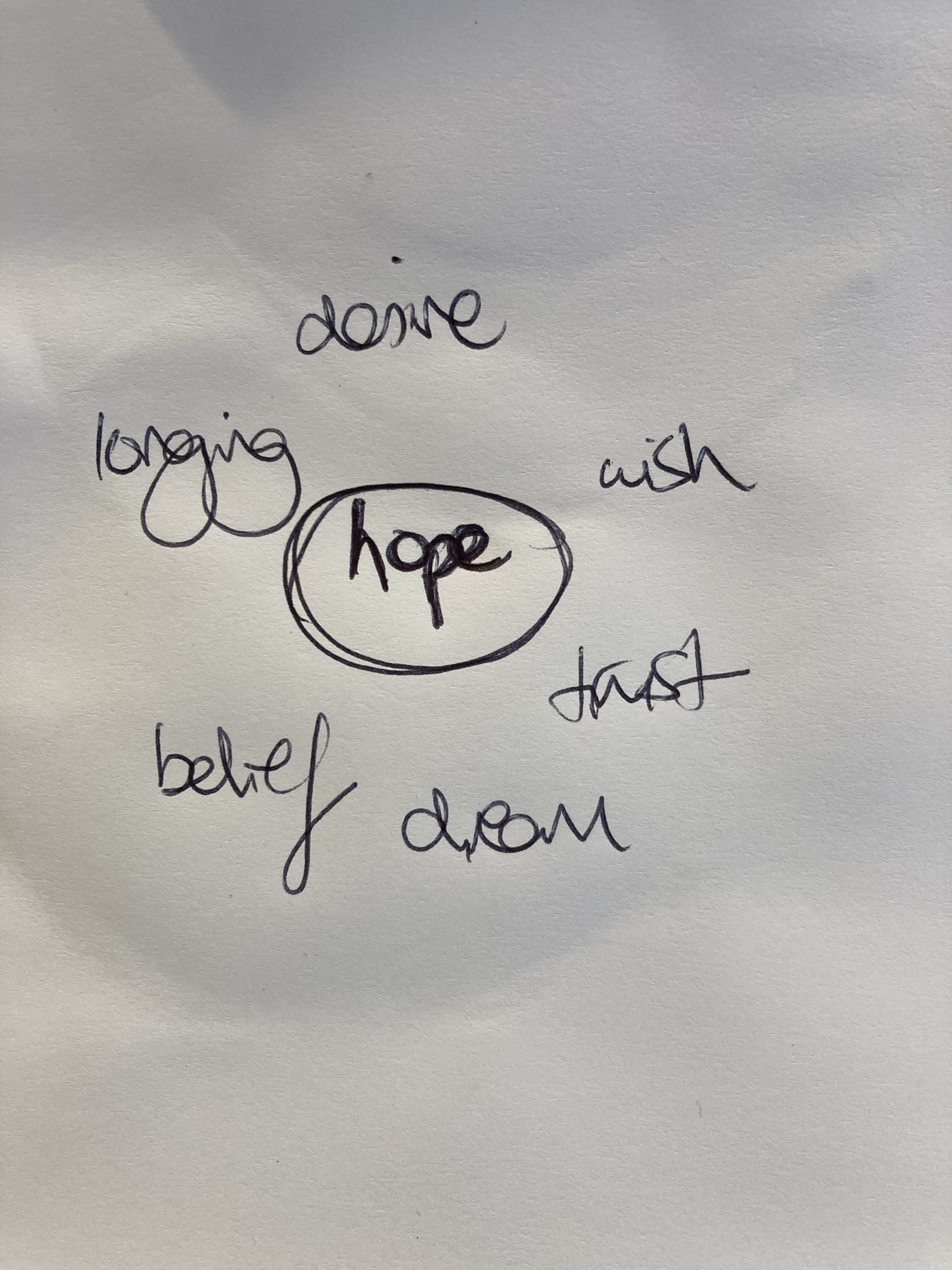
It’s been a year since I wrote anything. Writing is an act of faith. It requires belief that engaging and interacting has meaning; that it serves a purpose. It requires hope. Hope is something I’ve struggled to hold onto over the last year; crowded out by violence, division, hate, and a pervasive feeling that everything has gone wrong.

But here I am. Writing again.

The world is arguably an even bleaker place than it was a year ago. The genocidal actions of the IDF continue; the wealth gap grows ever larger; fossil fuel companies continue to make eye watering profits, further enhanced by war; biodiversity is falling as we live through the sixth mass extinction; the chance of staying below 1.5C of warming gets ever smaller; health and social care are failing people everywhere; the basics of life are more expensive and more children are living in poverty; fascism is on the rise; and every week brings a new reason to fear an apocalypse.

Continue reading

Healing wounds

My partner recently injured his hand on a faulty ladder. This took off an area of skin over a proximal finger joint resulting in a dramatic amount of bleeding and an inability to use the finger. Over the days and weeks since we have watched the healing process with fascination, noticing the stages of recovery of both form and function. Normal wound healing has four recognised stages: haemostasis, inflammation, proliferation, and remodelling. For a wound to heal successfully, the four phases must occur in the right sequence and time frame. Many factors can interfere with this process, risking impaired wound healing.

As we watched the re-epitheliation and remodelling of his physical wound it made me think about the unseen wounds many of us have suffered since the start of the pandemic, and the impaired wound healing we have been experiencing. So many people have been harmed not only by the virus itself but also by the lockdowns and the lack of a social safety net, eroded for decades by austerity. I see wounded people often in my work. They are incredibly adaptive and resilient but the body keeps the score, and many chronic diseases and distressing physical symptoms have their roots in emotional and social distress. I cannot speak for these people but I see them. I see their suffering and their strength.

Neither can I speak for all NHS staff, but is is well recognised that the pandemic traumatised healthcare workers. We experienced moral injury long before COVID-19, when we did not have the resources to provide the quality of care we wished to, were let down by a decimated social care system, or were forced to turn people in need away due to factors such as their immigration status. The pandemic brought us challenges that were all too familiar, but, more than that, it highlighted the pervasiveness, severity and proximity of this harm.

INDECISION
36” x 24” Acrylic paint on canvas, 2017. Cheyanne Silver.
From: www.luc.edu/features/stories/artsandculture/burnoutart/
Continue reading

Drawing myself back together

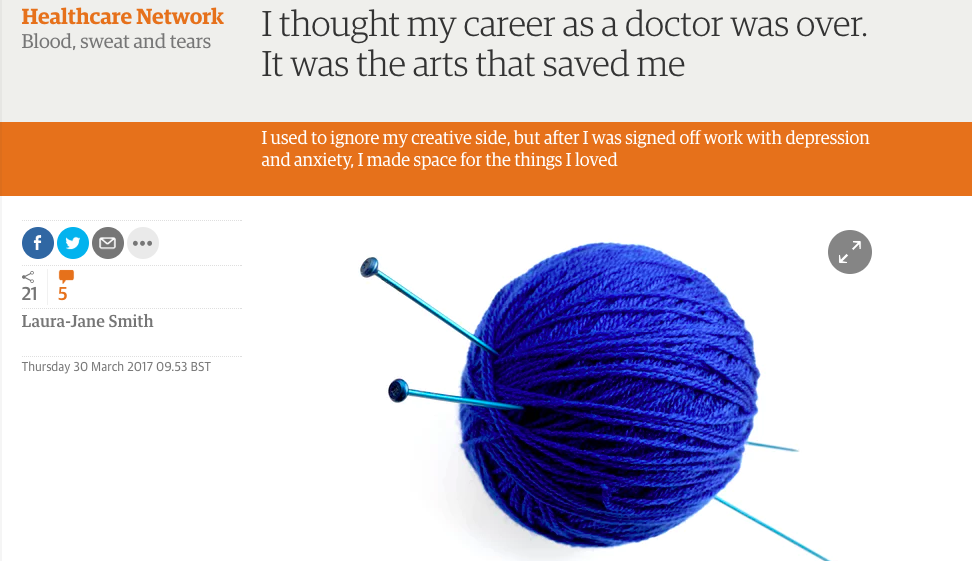
I wrote the blog below as part of a series curated by the London Arts in Health Forum, on art and culture, health and wellbeing. I and the other Trustees are already excited about 2017’s Creativity and Wellbeing Festival which will take place 12-18th June. Excitingly, an edited version of my blog was picked up by The Guardian, who have published it as part of their #BloodSweatTears series. You can read the article on The Guardian website.

The original blog follows.

Continue reading

A scarf, a suicide and a sense of perspective

I went out last night. It was cold, and just before I left the house I picked up my favourite scarf from the hat-stand. It’s my favourite for many reasons but predominantly because Miriam, who gave it to me, was wonderful.

Was.

She’s not here anymore. She died by suicide.

We were not best friends. We weren’t even really very close. She was my boyfriend’s best friend’s girlfriend. We would often be at the same social events, would sometimes have tea together over breakfast, and spent a lot of time together waiting around for ‘the boys’. Miriam was a medical student. One day, in the run up to end of year exams, she left the library where she had been studying, went home and killed herself.

Her death was a huge shock.

Continue reading