Tag Archives: politics

Complicity

The world feels dark this week. Israel has prevented any humanitarian aid from reaching Gaza for almost 2 months. People are starving, as well as being under constant threat of bombing. Since January, 10,000 cases of acute malnutrition among children have been identified, including 1,600 cases of severe acute malnutrition. We can never say we did know. Pictures of skeletal children flood social media. “The blockade of aid is a breach of International Humanitarian Law, including Article 23 of the Fourth Geneva Convention, which mandates free passage of essential humanitarian supplies. It also violates international human rights law, including Article 11 of the International Covenant on Economic, Social and Cultural Rights, which guarantees the right to food.” Who will hold Israel accountable for these atrocities? Many countries are complicit in the genocide, including the UK, but the US is bankrolling the killing. In 2024 alone, the U.S. government sent Israel at least $17.9 billion. They could stop the horror by stopping the flow of money.

Continue reading

we are not numbers

I had a relatively quiet week at work, off the wards, so tackled my to-do list. It’s a long list. I chose my least favourite task, writing the ward rota for the Respiratory Consultants. Why is a Consultant doing this tedious task, you may ask? This is a symptom of more than a decade of underinvestment in the NHS and the false economy of cuts, and more cuts, to a dwindling admin support team, resulting in more and more tasks being piled onto the clinical workforce. It would have been unthinkable to expect a Consultant to write a rota ten years ago. From a public and organisational perspective, it makes no sense to have employees who are paid well for their expertise and experience, performing admin tasks. Whilst I wrestle with excel spreadsheets, and attempt to solve hierarchical constraints problems, I am not delivering or improving patient care. Not only this, an undervaluing of admin in the NHS has led to low staff retention and poor patient experience. False economy is a feature of the modern NHS. Next time a politician talks about ‘cutting backroom staff’, remember that the work of the backroom does not go away, it just lands on the desk of the front line staff.

Continue reading

Euphemistically speaking

This week Labour announced ‘reforms’ to the benefits system as part of Rachel Reeves’ Spring Statement. Reform only ever means one thing in politics: cuts. The narrative from Labour is that they are having to make ‘hard choices’ because the Tories left everything in a mess. ‘Hard choices’ is another euphemism, parroted by the cabinet to justify economic violence towards ill and disabled people. Attempting to frame this is a moral crusade to get people back to work must surely leave a bitter taste in the mouths of any Labour ministers who still have a conscience. As NEF has shown, the widely reported numbers of £4.8bn of cuts leading to 250,000 more people being pushed into poverty, including 50,000 children, were actually an underestimate. The government have attempted to hide the truth using accounting tricks, factoring in a never implemented policy called the Work Capability Assessment which would have made it harder for people to qualify for a higher rate of universal credit on the basis of illness or disability. It was never implemented, so whilst it may make sense on spreadsheets, it is irrelevant to actual people, living on very little in a cost of living crisis. NEF analysis shows that the cuts will hit ill and disabled people by almost £2bn more than reported and could see around 100,000 additional people pushed into poverty.

Continue reading

Granny’s Garden

I spent most of the week at the British Thoracic Society Winter Meeting. It was a great mix of catching up with colleagues, discussing projects, and learning from the latest research. It’s an exciting time in the world of COPD with real hope for new treatments and a transformation of care over the next few years.

Medical conferences are not always comfortable spaces. I wrote about my ups and downs in a thread. Thankfully 2024 was a definite up.

I wrote this 🧵on the other place in the run up to #BTSWinter2024. The conference starts today, so I’m copying it over here. On belonging, joy, fear, imposter syndrome & how to enjoy medical conferences. 💙 1/n

[image or embed]— DrLJ (@drlaurajane.bsky.social) November 27, 2024 at 6:58 AM

Continue reading

Haunted

Since October 4th, at least one child has been killed and 10 injured daily by Israel in Lebanon. Fifty children were killed in Northern Gaza yesterday. Gaza’s children are not merely ‘collateral’ which would be horrific enough, but are targets of genocide, of erasure, of extermination. The Palestinian people have been so completely dehumanised that the world continues to stand by, spectators to the horror show. I sent more money to Osama and his family in Khan Younis, but they need much more than I can give. Osama is one of 8 siblings. His youngest sister Haya is just 11 years old. She has been robbed of her childhood. His father Sobhi has diabetes, and a deep foot ulcer, as well as heart disease. They cannot afford the escalating price of medications and there is no functioning health service.

It is too awful.

There was some hope this week as Barclays divested from Elbit systems after a direct action campaign. Until recently, Barclays owned over 16,000 shares in Elbit Systems, Israel’s largest weapons company, worth over $3,400,000. For over a year, Palestine Action activists have targeted Barclays premises, smashing branch windows and spraying them in blood-red paint. This has put Barclays sites out of operation for weeks, raising the costs associated with dealing with Elbit. Palestine Action’s broader campaign against Elbit systems and its’ financial and industrial partners aims to make the cost of dealing in genocide, occupation, and apartheid exceed the potential to profit from it. 

The CEOs of these corporations have no conscience, but hit their bottom line and they act.

Continue reading

This meeting could have been an email

I spend more of my life in meetings than I would like and often think “this meeting could have been an email.” But this week I have been in several short and very effective meetings. It is amazing what can happen when there is a clear shared purpose and the right people are in the (virtual) room. There has been research into the psychology of work meetings, and the impacts for organisational outcomes and culture. I wish everyone would be more critical of meetings and ensure they always had a clear purpose that could not be achieved by another communication method. I for one commit to pausing before sending any future diary invites!

Continue reading

Energy poverty can be lethal

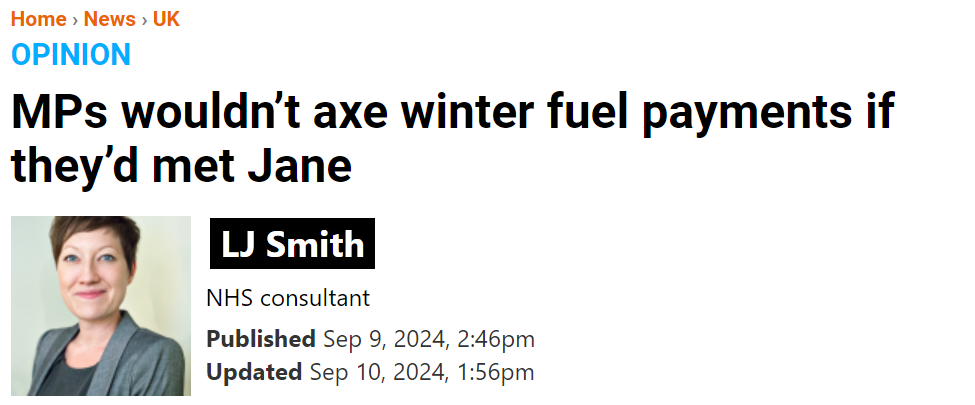
In advance of the recent MPs vote to withdraw the Winter Fuel Allowance from many pensioners, I wrote for The Metro, on the health impacts of energy poverty. Below is the published article, also available on The Metro online.

For those of us working in the NHS, worries about winter start earlier every year. 

I’m a consultant who specialises in respiratory illnesses, and as the weather starts to get worse, I’m reminded of Jane, a patient in her 70s, living with chronic obstructive pulmonary disease (COPD) and numerous other health problems who was admitted twice in a matter of weeks last winter. 

She was so scared by her energy bills that she had rationed her heating to an hour a day in one room of her poorly insulated, draughty home. It wasn’t enough. The cold left her vulnerable to infection and fighting for every breath. She didn’t know how to ask for help or where to turn to, so she ended up where so many do: in an NHS bed on my ward. 

Continue reading

Patients not passports

I spent this week scrolling through my news feed, watching war crimes committed by Russia in Ukraine. A hospital was just bombed. I sent more money to humanitarian organisations including Doctors of the World. Whilst it is easy to feel powerless in the face of terrible world events, there are ways we can stand in solidarity. And whilst our minds are focused on people fleeing conflict, it is a good time to consider how refugees are treated if they reach the UK and need healthcare. I was therefore pleased to be part of a panel this week, to launch the Southwark Patients not Passports campaign.

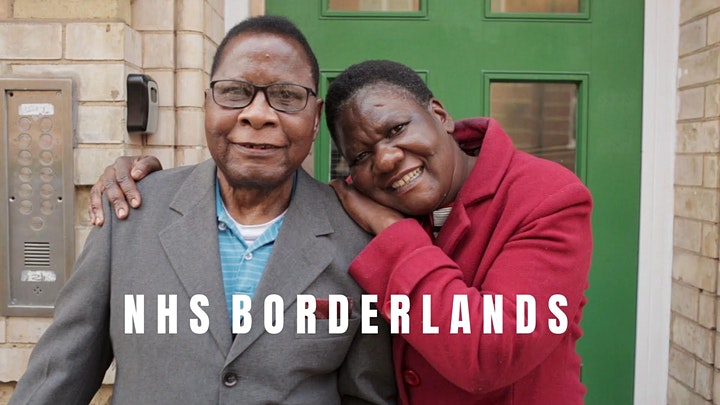
It included a screening of NHS Borderlands, an investigative documentary into the human cost of charging migrants for accessing the NHS, made by Bare Life Films. It features Angela who, after fleeing Zimbabwe in fear for her life, sought asylum in the UK where she has lived with her husband for 20 years. Following a vital hysterectomy operation Angela was – without warning – issued a bill for £8,000 by the NHS. Angela is not allowed to work and has no source of income and this bill jeopardizes her life in the UK forever. There are many stories like Angela’s, most untold and undocumented. This film shows how healthcare workers and campaigners are fighting alongside Angela to keep the border out of the NHS.

Continue reading

Mutual aid

A view across Greenland Dock, London in teh early morning when is is dark, looking across at a misty view of Canary Wharf.

Joy is elusive this month. I leave home early and return after a long day in darkness. My sleep is broken and unrefreshing. My dreams are invaded by oxygen flow meters, masks, monitors, and breathless patients. I am tired, but that word is inadequate to describe the omnipresent fatigue that seeps into every cell of my body through the day, and which sleep fails to banish.


But there is hope. There is always hope. And right now it’s name is mutual aid.

Continue reading

At the margins

There is a great tradition of healthcare professionals working as volunteers, both at home and abroad, and this is highlighted and celebrated by the BMA Doctors as Volunteers competition. I entered a poster this year, and was very pleased to be chosen as one of the two winners. Euston foodbank, where I volunteer, will be putting the £850 prize money to good use, ensuring our foodbank is welcoming, and purchasing essential equipment and stock. 

Continue reading