Category Archives: In Between

An unpalatable truth

The NHS can be a challenging place to work, particularly because it is so hard to change. When I see a problem I want to fix it, and that is just not the pace at which the NHS works! A problem I am confronted with several times a day is NHS food. The food we serve to NHS patients and staff is nothing less than a disgrace. It does not align with the best evidence on how to use nutrition to support health and recovery; many meals eaten by thousands of patients in NHS beds today will have contributed to the very problems making them sick. This is before we even consider the contribution that the food system makes to the climate crisis, or the lack of compassion shown towards sentient animals with whom we share this planet.

Nutritious plant-based meals served in New York Hospitals

Over the last few years I have dedicated an increasing amount of time to bringing attention to the urgent task of changing our food system. In this work I stand alongside my colleague Dr Shireen Kassam who is both an ally and an inspiration. It’s rare to find a kindred spirit who is excited and enraged by the same things as I am: Shireen is that rarity. As we get closer to the launch of our campaign Plants First Healthcare, we wrote for BMJ Leader, making the case that it is high time healthcare organisations led by example in the food we serve to staff and patients.

Why are hospitals, places people rely on to restore their health, serving food that makes them sick?

Continue reading
Energy poverty can be lethal

In advance of the recent MPs vote to withdraw the Winter Fuel Allowance from many pensioners, I wrote for The Metro, on the health impacts of energy poverty. Below is the published article, also available on The Metro online.

For those of us working in the NHS, worries about winter start earlier every year. 

I’m a consultant who specialises in respiratory illnesses, and as the weather starts to get worse, I’m reminded of Jane, a patient in her 70s, living with chronic obstructive pulmonary disease (COPD) and numerous other health problems who was admitted twice in a matter of weeks last winter. 

She was so scared by her energy bills that she had rationed her heating to an hour a day in one room of her poorly insulated, draughty home. It wasn’t enough. The cold left her vulnerable to infection and fighting for every breath. She didn’t know how to ask for help or where to turn to, so she ended up where so many do: in an NHS bed on my ward. 

Continue reading

Patients not passports

I spent this week scrolling through my news feed, watching war crimes committed by Russia in Ukraine. A hospital was just bombed. I sent more money to humanitarian organisations including Doctors of the World. Whilst it is easy to feel powerless in the face of terrible world events, there are ways we can stand in solidarity. And whilst our minds are focused on people fleeing conflict, it is a good time to consider how refugees are treated if they reach the UK and need healthcare. I was therefore pleased to be part of a panel this week, to launch the Southwark Patients not Passports campaign.

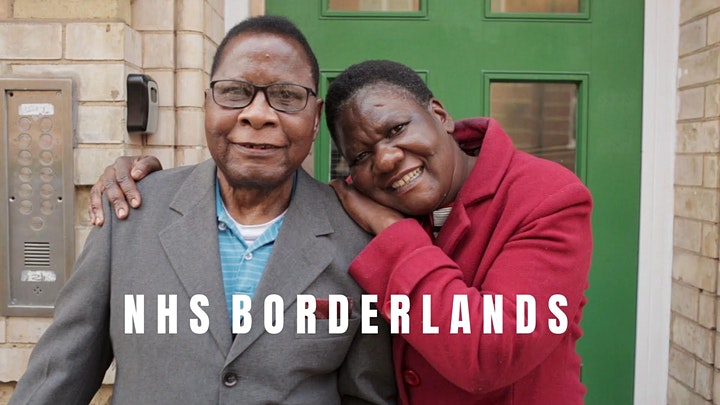
It included a screening of NHS Borderlands, an investigative documentary into the human cost of charging migrants for accessing the NHS, made by Bare Life Films. It features Angela who, after fleeing Zimbabwe in fear for her life, sought asylum in the UK where she has lived with her husband for 20 years. Following a vital hysterectomy operation Angela was – without warning – issued a bill for £8,000 by the NHS. Angela is not allowed to work and has no source of income and this bill jeopardizes her life in the UK forever. There are many stories like Angela’s, most untold and undocumented. This film shows how healthcare workers and campaigners are fighting alongside Angela to keep the border out of the NHS.

Continue reading

Tunnels, traffic and toxic air

Over the last few years I have become increasingly concerned about preventable death and disease from air pollution. As a Respiratory doctor, I worry for my patients living with asthma and COPD, but air pollution affects everyone of every age in London, and every organ of the body. Of course it doesn’t affect us all equally, as the poorest in the city contribute least but are affected most by the toxic air they are forced to breahe. Air pollution is a stark example of the social and health inequalities exacerbated by Climate change. Before the Mayoral elections, I and friends from MedAct made short films, showing the air pollution on our commutes from home to work.

I had hoped that Sadiq Khan, a mayoral candidate at the time, would be a strong advocate for Clean Air, and he has been, at least in words. But actions speak far louder, and disappointingly he has not cancelled the Silvertown Tunnel which will bring more toxic fumes to some of the most polluted communities in London.

Continue reading

Mutual aid

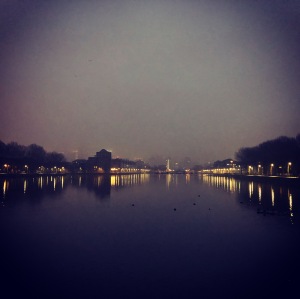
A view across Greenland Dock, London in teh early morning when is is dark, looking across at a misty view of Canary Wharf.

Joy is elusive this month. I leave home early and return after a long day in darkness. My sleep is broken and unrefreshing. My dreams are invaded by oxygen flow meters, masks, monitors, and breathless patients. I am tired, but that word is inadequate to describe the omnipresent fatigue that seeps into every cell of my body through the day, and which sleep fails to banish.


But there is hope. There is always hope. And right now it’s name is mutual aid.

Continue reading

At the margins

There is a great tradition of healthcare professionals working as volunteers, both at home and abroad, and this is highlighted and celebrated by the BMA Doctors as Volunteers competition. I entered a poster this year, and was very pleased to be chosen as one of the two winners. Euston foodbank, where I volunteer, will be putting the £850 prize money to good use, ensuring our foodbank is welcoming, and purchasing essential equipment and stock. 

Continue reading

The professional is political

There is little hope in a recent piece on Respiratory Futures from Dr Phil Hammond. He paints a bleak picture of the NHS under the current Conservative government, and crystallises fears that many of us have that things will only get worse post-Brexit.

The NHS is more than a place we go to work: it is a community, a family. Attacks on our family feel personal and hurt deeply. What has disappointed me over the last few years is the lack of anger and action from our community. Doctors in particular seem to take pride in separating politics from professionalism. They refuse to speak up or get involved, maintaining a so called ‘neutral’ position.

Continue reading

The Future is Red

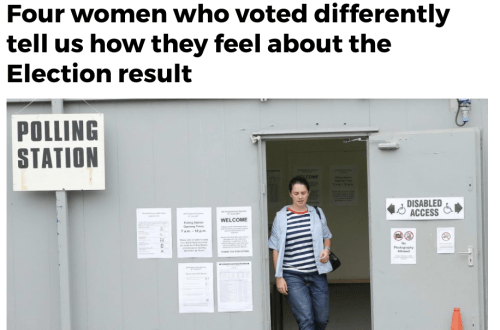
I spoke to Marie Claire magazine about my vote, and my response to the election result. You can read the full article, including three other women’s responses, here. Below is my section of the article.

Continue reading

Relationship status update

I wrote the following as an entry for the Royal College of Physicians Teale Essay Prize 2017. The essay title was: How do trainees engage with the RCP and vice versa? – is this a case of a long distance relationship – how can we make this marriage work better? I did not win, but I am sharing here as a provocation. What should postgraduate education look like, and how do we get there?

Continue reading

More doctors should engage with arts and health

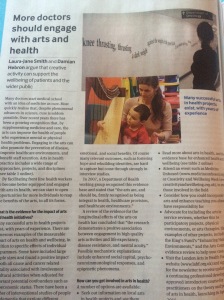
An article I co-wrote “More doctors should engage with arts in health” was recently published in BMJ careers. A longer version is below. Many healthcare professionals are interested in the arts, as part of their own wellbeing as well as their patients. It may not be clear how to align this interest with day to day work, and arts in health practice can therefore seem inaccessible to clinicians. We hope to bridge this gap with an introductory training event, the first of which will be on 30th June at the UCL Macmillan Cancer Centre, and has been approved for 3 RCP CPD points. Read more about it on the LAHF website, and book tickets via EventBrite.

IMG_3598

What is good health?

Doctors spend their professional lives trying to help their patients achieve good health. Although many start medical school with an idealised image of medicine as cure, most rapidly realise that despite phenomenal advances in science, cure is seldom possible. This is partly due to the nature of disease and the inevitable frailty of the human body, and partly due to the fact that none of us exist in a vacuum, and our potions and pills do nothing to change individual patients’ contexts or experience of illness. In fact ‘illness’ is almost impossible to define, as we medicalise more and more natural life processes and events. How can medicine address modern day phenomena of socioeconomic inequalities, lack of housing, poverty, loneliness, ageing, grief, disengagement from society, struggles with sexuality, or finding meaning in life? Should it?

Continue reading