The human touch

I recently took a group of medical students to see Mrs Cole*. She was 88 and was in hospital due to a severe exacerbation of COPD. She was kind enough to let us talk to her and listen to her lungs, despite being quite breathless. As we talked I perched on the edge of the bed and, as I often do, held her hand.  She grasped it tightly and wouldn’t let go. I finished the teaching session, sent the students off to their lecture, and stayed with Mrs Cole longer than I had intended. It felt like she was clinging to me as we talked; clinging to my youth, my health, and my carefree existence.

I couldn’t offer her much: we were treating her exacerbation but no drugs could reverse her lung damage. No words could allay her very real fears for the future. But I felt what I could offer – a tiny piece of my time, and my hand to hold – meant something.

Continue reading

A scarf, a suicide and a sense of perspective

I went out last night. It was cold, and just before I left the house I picked up my favourite scarf from the hat-stand. It’s my favourite for many reasons but predominantly because Miriam, who gave it to me, was wonderful.

Was.

She’s not here anymore. She died by suicide.

We were not best friends. We weren’t even really very close. She was my boyfriend’s best friend’s girlfriend. We would often be at the same social events, would sometimes have tea together over breakfast, and spent a lot of time together waiting around for ‘the boys’. Miriam was a medical student. One day, in the run up to end of year exams, she left the library where she had been studying, went home and killed herself.

Her death was a huge shock.

Continue reading

When the lights go out

Most people I know have never watched a person die. Even those that have been to funerals and therefore have seen and been in physical proximity to a body, have rarely been present at the moment of death. The moment when in the eyes of the dying person the lights go out.

I have been there, in the moment, a number of times and remember every time with eerie clarity. Sometimes I have known the patient well; other times I have only met them in their last minutes or seconds. Sometimes it has been almost ethereally peaceful. Other times it has been frantic, chaotic or distressing despite our best efforts to treat end of life symptoms. Most often it has just happened.

Continue reading

Life in my shoes

On a recent set of on call shifts I met James,* who my team treated for pulmonary emboli. He was a lovely man; visits to check he was on enough oxygen to maintain his saturations and to assess his haemodynamic status were a joy, due to his easy manner and good humour.

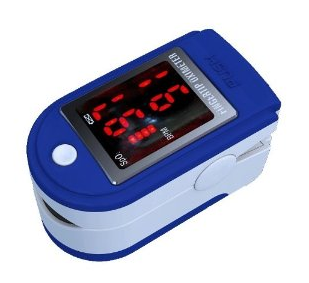
Pulse Oximeter, for monitoring oxygen saturations

One one occasion I was with my Consultant, who had known James for a while prior to this admission. At the end of the consultation he asked a very powerful question “is there anything else on your mind?” At this point I was closing the notes folder and putting my pen in my pocket, expecting to move on to the next patient. But James  did have something on his mind.

What I have not mentioned is that James is HIV positive. He has been living with HIV for many years and facing the challenges associated with this with resolve and good humour. His current problem was not directly related to his HIV status, but as is the usual practice whilst he was in hospital he was cared for by both the general medical team, and the “immune deficiency team” who were able to advise on potential interactions with his ARVs and give other specialist input.

Continue reading

How to die: CPR and the concept of futility

I recently cared for Ernest,* an 87 year old gentleman who spent around two weeks on my ward. Prior to admission his health was poor. He was bed-bound due to the late stages of a degenerative neurological disease, and had associated cognitive impairment. He had several other health complaints, and had been in hospital multiple times in the previous year with infections. He had always responded to antibiotics but his condition and level of interaction with the world had declined with each admission. On arrival to our ward I noticed that he did not have a DNAR order and, since he was not able to discuss his wishes, I looked to the family for information and to broach this subject. I was surprised to find that several vocal family members were adamantly against a DNAR. I had lengthy discussions explaining my reasons for believing that attempts at resuscitation would be futile and that setting limits of care was important to ensure we pursued quality, not just quantity of life. They listened, seemed to understand, and themselves identified his frailty, deterioration over the last year, and decline in his quality of life. However they strongly objected to us making him “not for attempted resuscitation.” As the end of the week approached I felt uncomfortable about the lack of a DNAR order, and about the possibility of this frail gentleman suffering a brutal and undignified exit to the world should his heart stop.

Continue reading

Health, wealth and the centenarian

Recently I treated and discharged a 101 year old gentleman. Back to his own home. And not a care package in sight.

As a hospital physician I rarely meet this group of older people, living full and independent lives. My view of the over 65s is coloured by my frequent encounters with the most unlucky ones; suffering from chronic disease, dementia, cancer and frailty.  But they exist, these sprightly centenarians and in increasing numbers. And even more common are older people with a lot to contribute to society, but in need of a little support in order to maximise their potential. Between now and 2050 the number of people aged 80 years will almost quadruple to 395 million. At that point, there will be more people over 65 than children under 14.  Our world is changing, but are we ready for this global silver revolution?

As a broad generalisation “western society,” does not value age, experience and wisdom. Our culture is obsessed with youth and a narrow definition of beauty which has no time for those perceived as “past their prime.” But in the last few weeks I seem to have read an abundance of good news stories about older people doing incredible things. On Saturday Live on BBC R4 I listened in awe and fascination to Mary Hobson who took a degree in Russian in her 60s and now, in her 80s is winning awards for her version of Pushkin.

Continue reading

5 things

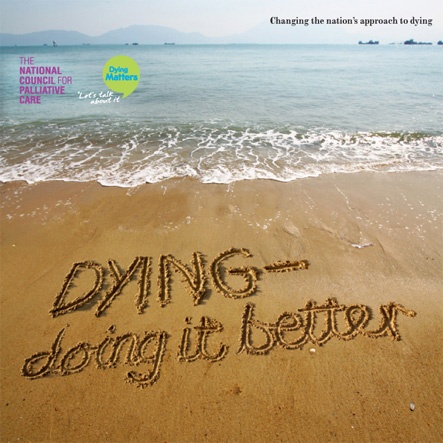
This week is Dying Matters Awareness Week 2012, the theme of which is “small actions, big difference”. As part of the campaign, people are being encouraged to take small actions which include:

  • helping someone to write a will
  • showing and discussing one of the Dying Matters films
  • visiting someone who’s been recently bereaved
  • becoming an organ donor
  • documenting your own end of life wishes
  • writing down 5 things you want to do before you die

Some of my friends and family think I spend too much time thinking about death. But because I think about the fact that life will end (hopefully not for a while), it seems so much more precious. So here are 5 things for my bucket list:

Continue reading

A Grief Encounter

Last week was particularly stressful; marked by staff shortages, anguished relatives, conflict over complex discharge processes, and pressure to create beds. The amount of time I spent with each patient on my ward rounds was less that what I, or they, would have wanted but despite coming in early and leaving late there are only so many hours in a day. In weeks like these I often feel guilty as I leave work that I am unable to give more time to those patients and relatives facing the end of life.

More than many other people I know, I am acutely aware of the fragility of life.

Continue reading

Discharges in the dead of night

NHS Hospital discharges: thousands claimed to occur overnight

The news this week has been full of horror stories of patients being discharged from hospital in the dead of night. “Where is the compassion?” they cried, “How could they, the supposed caring profession?”  The stories began after The Times discovered, via Freedom of Information requests, that 100 NHS trusts sent 239,233 patients home last year between 11pm and 6am

The immediate response of the press was to paint a picture of an army of ambulance drivers booting out frail 90 year olds; dumping them at their front doors, alone in the dead of night. This dramatic depiction fuelled discussions on various forums and news programmes. The callers on Radio 4s “Any answers” actually made me turn the radio off.

Continue reading

The Dangers of DIY Diagnosis

I spend all day talking to patients about their health and disease, explaining the rationale for tests and discussing the possible outcomes of different treatment strategies. This is often difficult and complex. I struggle to articulate risk, uncertainty, and the art of medicine; the shades of grey that are a day to day reality, and which medical school does not necessarily prepare you for.  I was therefore outraged when, on my way home after a hard day at work, I saw this advert on the Tube:

An advert on London Underground for an over the counter blood test.

I should sue Myrios for emotional distress: I almost fell onto the tracks. What shocked me was the cynical, and cheerful, exploitation of people’s worries about their health.

Continue reading