Tag Archives: medicine

Yuletide cheer

I had a lovely Christmas week, full of family and friends, and food, and thoughtful gifts. We had Mushroom Wellington and Maple Glazed Seitan Ham for Christmas dinner. It was super.

I was working for the days around the Bank Holidays. We rotate who does Christmas Day and, having done last year, I get a break for a few years. Hospitals are strange places at Christmas, a mixture of intense sadness and heart warming joy. Maybe that’s always the case, but Christmas somehow magnifies the contrasts. The people who remain inpatients at Christmas are those who are too sick to care or notice, and those for whom hospital is their best option. We’re always under pressure to discharge people and make beds, but to be honest, in the few days before Christmas I don’t discharge anyone who wants to be there. If home does not have something better to offer than a hospital bed then who am I to inflict loneliness, fear or sadness on anyone.

There is flu and RSV everywhere. People with chronic medical conditions are very sick. Even those who are usually well are strugling to shake off the persistent cough and fatigue. Vaccination rates remain much lower than pre-COVID. It’s hard to see how we’ll ever improve the situation and convince people of the benefits when there is so much misinformation and fear around vaccines.

Continue reading
Granny’s Garden

I spent most of the week at the British Thoracic Society Winter Meeting. It was a great mix of catching up with colleagues, discussing projects, and learning from the latest research. It’s an exciting time in the world of COPD with real hope for new treatments and a transformation of care over the next few years.

Medical conferences are not always comfortable spaces. I wrote about my ups and downs in a thread. Thankfully 2024 was a definite up.

I wrote this đź§µon the other place in the run up to #BTSWinter2024. The conference starts today, so I’m copying it over here. On belonging, joy, fear, imposter syndrome & how to enjoy medical conferences. đź’™ 1/n

[image or embed]— DrLJ (@drlaurajane.bsky.social) November 27, 2024 at 6:58 AM

Continue reading

Impatience

I was recently asked what my primary emotion is, and I answered, without hesitation: impatience. This is both a blessing and a curse. It drives me to work hard try to change the problems I see everywhere, every day, and makes me very productive. But it also makes me a bit of a nightmare to work and live with. I struggle to slow down and to accept the slow pace of change that is a common reality. I tell others to remember their sphere of influence and not to expend energy on things way outside it, as this way burnout lies. I often fail to take this advice myself. This week I have felt very impatient.

COP 29 is happening. At least 1,773 fossil fuel lobbyists have been granted access to the summit in Baku. In an open letter, a group of international experts have stated that the UN Climate talks are no longer fit for purpose, and called for reform. Global emissions continue to increase, carbon sinks are being degraded and we are headed for more than 2.9°C of warming by 2100. I respect those who continue to participate in COP but I would not have the patience or diplomacy required.

Continue reading

The other side of hope

NHS IT is universally acknowledged to be a nightmare. The promise of technology is always that it will save time and make us more efficient. But the reality is that staff feel like slaves, feeding the ever-ravenous monster of the electronic health record with more and more data, more and more time. Time stolen from patients. Worse still, the monster never regurgitates the promised useful data.

It therefore felt like a huge win this week when I managed to get multistep voice commands working in Dragon and EPIC. This has dramatically reduced the time it takes me to do frequent routine tasks, and reduced my risk of RSI. A year after implementation I finally feel like EPIC might make my job easier, as was promised. The beast is not dead, but it has been tamed somewhat.

Continue reading

Haunted

Since October 4th, at least one child has been killed and 10 injured daily by Israel in Lebanon. Fifty children were killed in Northern Gaza yesterday. Gaza’s children are not merely ‘collateral’ which would be horrific enough, but are targets of genocide, of erasure, of extermination. The Palestinian people have been so completely dehumanised that the world continues to stand by, spectators to the horror show. I sent more money to Osama and his family in Khan Younis, but they need much more than I can give. Osama is one of 8 siblings. His youngest sister Haya is just 11 years old. She has been robbed of her childhood. His father Sobhi has diabetes, and a deep foot ulcer, as well as heart disease. They cannot afford the escalating price of medications and there is no functioning health service.

It is too awful.

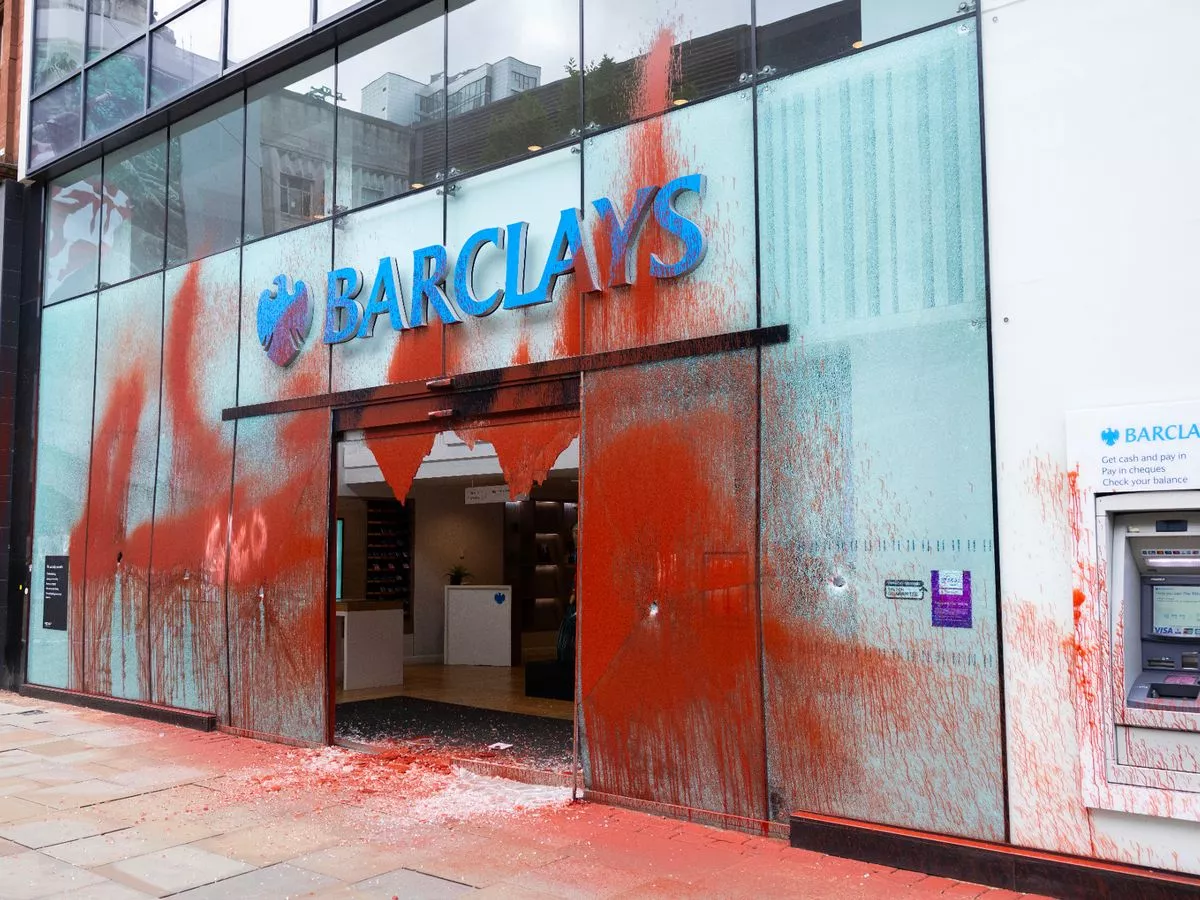
There was some hope this week as Barclays divested from Elbit systems after a direct action campaign. Until recently, Barclays owned over 16,000 shares in Elbit Systems, Israel’s largest weapons company, worth over $3,400,000. For over a year, Palestine Action activists have targeted Barclays premises, smashing branch windows and spraying them in blood-red paint. This has put Barclays sites out of operation for weeks, raising the costs associated with dealing with Elbit. Palestine Action’s broader campaign against Elbit systems and its’ financial and industrial partners aims to make the cost of dealing in genocide, occupation, and apartheid exceed the potential to profit from it. 

The CEOs of these corporations have no conscience, but hit their bottom line and they act.

Continue reading

This meeting could have been an email

I spend more of my life in meetings than I would like and often think “this meeting could have been an email.” But this week I have been in several short and very effective meetings. It is amazing what can happen when there is a clear shared purpose and the right people are in the (virtual) room. There has been research into the psychology of work meetings, and the impacts for organisational outcomes and culture. I wish everyone would be more critical of meetings and ensure they always had a clear purpose that could not be achieved by another communication method. I for one commit to pausing before sending any future diary invites!

Continue reading

Every day I pray for love

I was off work this week, but somehow found myself even more busy than usual. Being off work I had more time to watch the live streamed horrors in Gaza and Lebanon. I signed more petitions. I stepped up my boycott of companies profiting from Israel’s crimes. I sent money directly to a family in Khan Younis. Osama is 22, the oldest of 8 siblings, trying to keep his displaced family safe. His father needs medication, but with Israel’s military targeting hospitals and killing healthcare workers, leaving no functioning health service, very little is available. Almost no aid is entering Gaza. I can’t watch. I can’t not watch. I feel hollow.

Continue reading

Healing wounds

My partner recently injured his hand on a faulty ladder. This took off an area of skin over a proximal finger joint resulting in a dramatic amount of bleeding and an inability to use the finger. Over the days and weeks since we have watched the healing process with fascination, noticing the stages of recovery of both form and function. Normal wound healing has four recognised stages: haemostasis, inflammation, proliferation, and remodelling. For a wound to heal successfully, the four phases must occur in the right sequence and time frame. Many factors can interfere with this process, risking impaired wound healing.

As we watched the re-epitheliation and remodelling of his physical wound it made me think about the unseen wounds many of us have suffered since the start of the pandemic, and the impaired wound healing we have been experiencing. So many people have been harmed not only by the virus itself but also by the lockdowns and the lack of a social safety net, eroded for decades by austerity. I see wounded people often in my work. They are incredibly adaptive and resilient but the body keeps the score, and many chronic diseases and distressing physical symptoms have their roots in emotional and social distress. I cannot speak for these people but I see them. I see their suffering and their strength.

Neither can I speak for all NHS staff, but is is well recognised that the pandemic traumatised healthcare workers. We experienced moral injury long before COVID-19, when we did not have the resources to provide the quality of care we wished to, were let down by a decimated social care system, or were forced to turn people in need away due to factors such as their immigration status. The pandemic brought us challenges that were all too familiar, but, more than that, it highlighted the pervasiveness, severity and proximity of this harm.

INDECISION
36” x 24” Acrylic paint on canvas, 2017. Cheyanne Silver.
From: www.luc.edu/features/stories/artsandculture/burnoutart/
Continue reading

Can we find the spirit of ’45 in 2013?

Today marks a defining moment in the history of Britain, but looking around you wouldn’t believe it. Today, April 1st 2013, sees the The Health and Social Care Act (HSCA) come into force.

The death certificate of the NHS, issued by the National Health Action Party

The death certificate of the NHS, issued by the National Health Action Party

Some still believe that those opposed to the HSCA are over-dramatic, reactionary or naive. They will probably dismiss the National Health Action Party as extreme and publicity-seeking as it has issued a death certificate for the NHS, citing the cause of death as the HSCA 2013, with contributing causes including Thatcherism and the failure of New Labour. But it is difficult to see how anything but extreme statements and gestures can capture the attention of the public. Our generation is standing by as the NHS is quietly privatised and I for one am ashamed.

Continue reading

What’s in a name?

At work recently I felt like a broken record. “What’s their name?” I said again and again with increasing frustration as I received calls about patients who were referred to as “bed 3,” “side room 1,” and “bed 9.”

Of course, at times it is convenient and even desirable to omit a patient’s name in a conversation. It was suggested on Twitter that it may be better to overhear what ‘bed 9’ needs rather than ‘John Doe is ready for his haemorrhoidectomy,’ and in this case I agree! My worry is that in most cases there is no explicit intent to maintain confidentiality. Instead the convenience of referring to people by their bed number slips into routine communication. I have certainly been guilty of this myself. I worry that this is not merely disrespectful, but that it contributes to the dehumanising experience of being a patient, and negatively impacts on the doctor-patient relationship.

Continue reading