Tag Archives: Healthcare

On revolutionary medicine

On Thursday I spent the evening on Hampstead Heath with a group of people brought together by an organiser in Medact. We met to sit in the sun, share a picnic and discuss Che Guevara’s speech to recruits of a new post-revolution training program at Cuba’s Ministry of Public Health. On revolutionary medicine, is both specific to a time and place, and timeless in it’s analysis of how society defines, creates and sustains health or, more often, fails to do so.
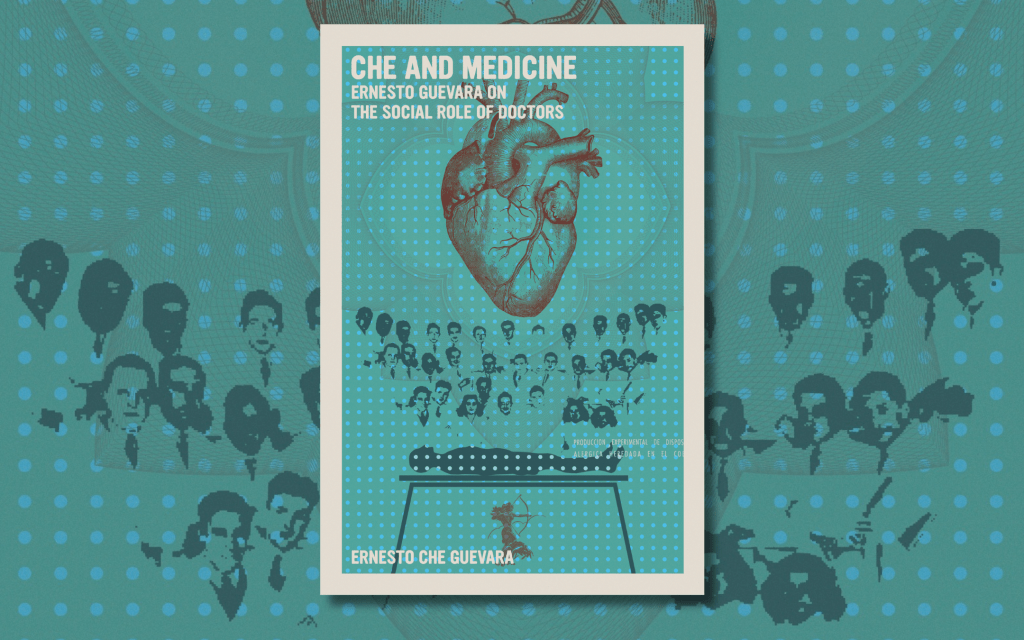
‘Che and Medicine’ is a collection of his writings on medicine from Seven Stories Press. It argues for a collectivized health system and the integration of every health worker into the revolutionary movement.

Che was born premature, had pneumonia as an infant, and suffered with difficult to control asthma throughout his life. He had extended periods off school when his mother would home-school him. Rather than accept chronic illness, Che looked for ways to support his body to heal. He altered his diet, fasted, and pushed himself to be physically active outdoors. He adopted the principles of Lifestyle Medicine intuitively and saw the benefits, years before the evidence base would catch up and I would complete a diploma with the International Board of Lifestyle Medicine. Che’s personal experiences heavily influenced his later vision of a Cuban health system, but he wisely saw the limits of individual action, and the need for a collective community-based approach to health.

Continue reading

Parallel lives

parralel clouds

I am immeasurably proud of the NHS: the most successful model of healthcare the world has ever seen. If anyone within my earshot suggests that privatisation would be a step forward they rapidly regret it. But even I sometimes get a wake up call: a stark reminder of the absolute necessity of the NHS, and the horror we may face if the political right’s dream of marketised healthcare is realised.

On a recent shift as the Medical Registrar I received a call from an A&E doctor who wished to discuss a patient who had suffered a stroke. I was surprised as all patients with strokes are channelled into the acute stroke pathway: assessed and treated by a dedicated team and admitted to a specialised unit for consideration of thrombolysis; specialist investigations; and early physio, speech and language therapy. However the A&E doctor explained the situation and I agreed to admit Maria*.

I sat by Maria’s bed in the Medical Assessment Unit, and listened as she told me her story.

Continue reading

What’s in a name?

At work recently I felt like a broken record. “What’s their name?” I said again and again with increasing frustration as I received calls about patients who were referred to as “bed 3,” “side room 1,” and “bed 9.”

Of course, at times it is convenient and even desirable to omit a patient’s name in a conversation. It was suggested on Twitter that it may be better to overhear what ‘bed 9’ needs rather than ‘John Doe is ready for his haemorrhoidectomy,’ and in this case I agree! My worry is that in most cases there is no explicit intent to maintain confidentiality. Instead the convenience of referring to people by their bed number slips into routine communication. I have certainly been guilty of this myself. I worry that this is not merely disrespectful, but that it contributes to the dehumanising experience of being a patient, and negatively impacts on the doctor-patient relationship.

Continue reading