
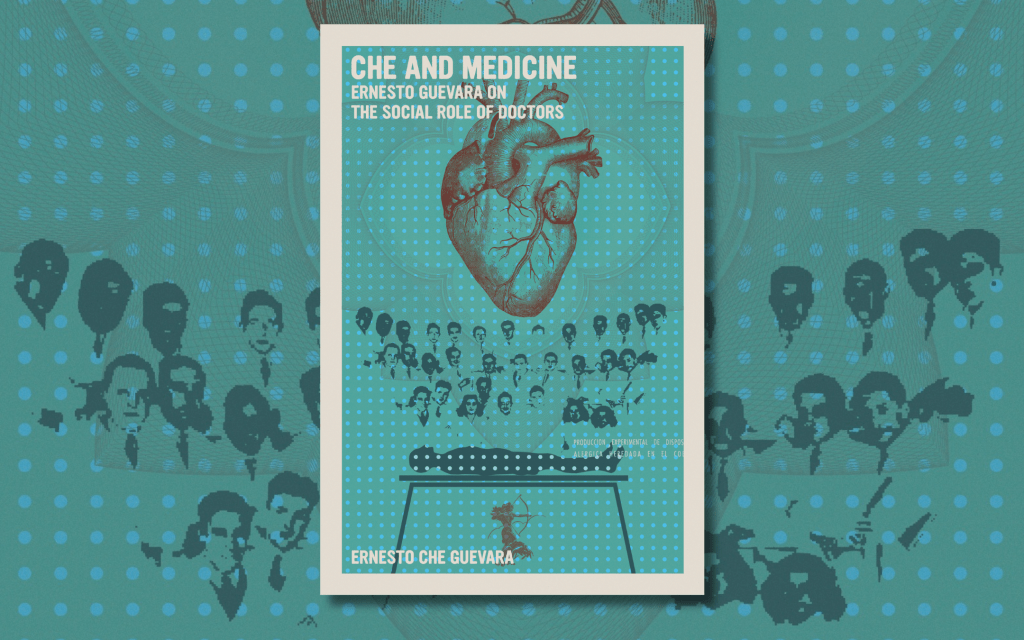
On Thursday I spent the evening on Hampstead Heath with a group of people brought together by an organiser in Medact. We met to sit in the sun, share a picnic and discuss Che Guevara’s speech to recruits of a new post-revolution training program at Cuba’s Ministry of Public Health. On revolutionary medicine, is both specific to a time and place, and timeless in it’s analysis of how society defines, creates and sustains health or, more often, fails to do so.
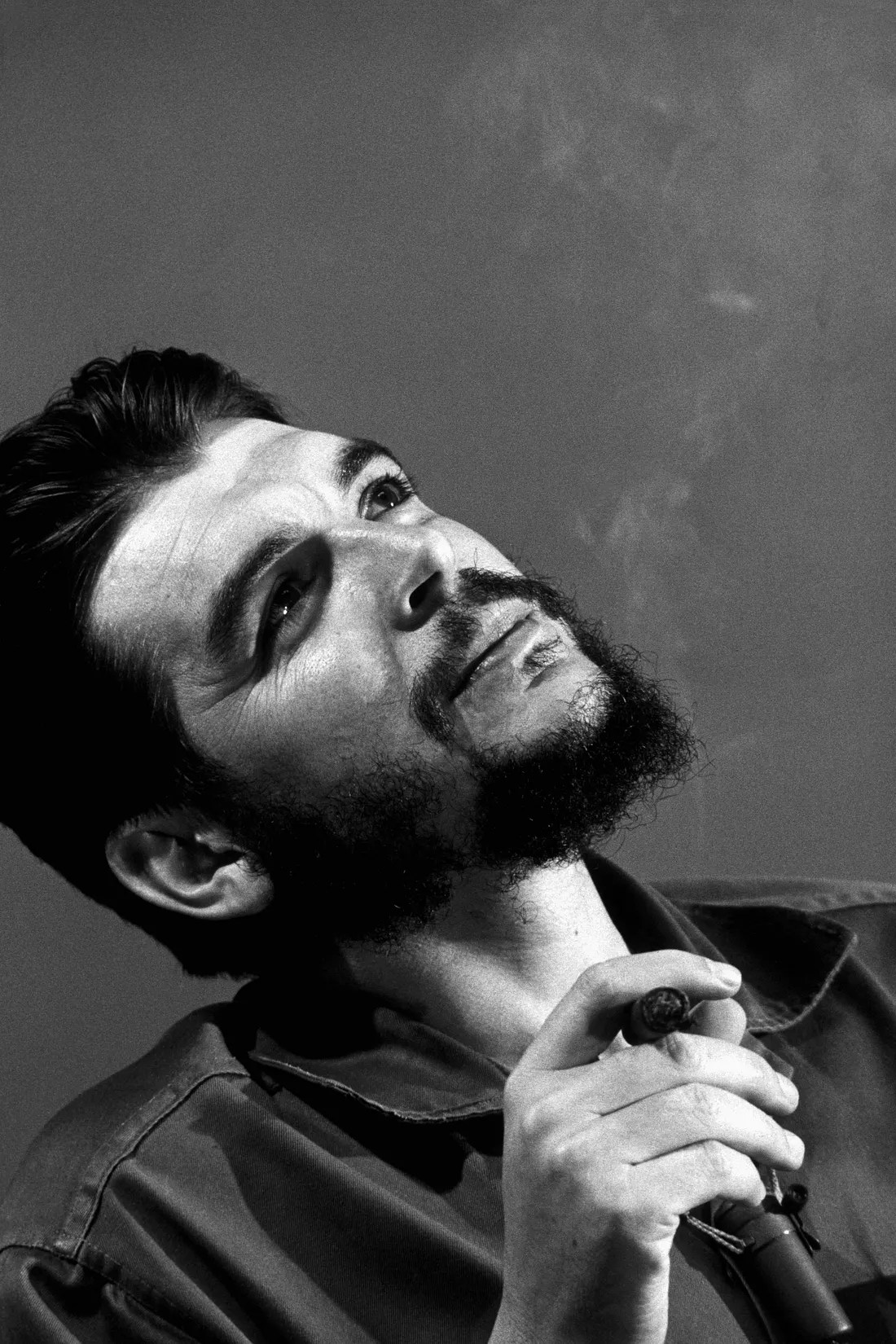
Che was born premature, had pneumonia as an infant, and suffered with difficult to control asthma throughout his life. He had extended periods off school when his mother would home-school him. Rather than accept chronic illness, Che looked for ways to support his body to heal. He altered his diet, fasted, and pushed himself to be physically active outdoors. He adopted the principles of Lifestyle Medicine intuitively and saw the benefits, years before the evidence base would catch up and I would complete a diploma with the International Board of Lifestyle Medicine. Che’s personal experiences heavily influenced his later vision of a Cuban health system, but he wisely saw the limits of individual action, and the need for a collective community-based approach to health.
“The principle upon which the fight against disease should be based is the creation of a robust body; but not the creation of a robust body by the artistic work of a doctor upon a weak organism; rather, the creation of a robust body with the work of the whole collectivity, upon the entire social collectivity.”
This has echoes of the Beveridge Report, which became the basis of the UK’s Welfare State. Beveridge, an economist, had a revolutionary vision of a welfare state that could slay ‘The Five Giants’: want, disease, ignorance, squalor and idleness, and care for all from cradle to grave.
Some argue that falling infant mortality, increasing life expectancy, higher incomes, a greater proportion of women in work, and an expansion of home ownership, alongside economic and technological changes, mean that Beveridge’s principles are no longer fit for the modern world. On the 75th anniversary of the Beveridge Report the choice of language from Secretary of State for Work and Pensions David Gauke is revealing. A ‘contributory system’ in which welfare recipients agree to a ‘Claimant Commitment’, a specific set of actions to ensure that they move towards and enter work, feels transactional and othering, and a corruption of Marx’s “from each according to his ability, to each according to his need”. It is far from a creation of a robust social body. It is far from collectivity.
The current health strategy for the UK is based on ‘the three shifts’: hospital to community; analogue to digital; and sickness to prevention. The shift from hospital to community is being effected through Integrated Neighbourhood Teams (INTs) which offer real potential to connect GP practices and other community based teams, tertiary specialists in common conditions, mental health services, social care, and third sector organisations. INTs are the latest stage of unravelling the damaging marketisation of the NHS of the Major and Blair governments, which focused on competition. INTs recentre collaboration and I hope will be effective.
The move from analogue to digital is also proceeding. Many services increasingly use apps to deliver patient information and data tracking. This can be highly valuable, but there is inadequate attention paid to supporting people to access necessary tech and to build the skills to use it, to mitigate digital exclusion. To standardise data organisation and access, the aim is for all GPs to move to 1 of 2 primary care based electronic health records (EMIS or SystmOne), and for all hospitals to move to 1 of 2 secondary care based systems EPIC or Oracle, formally Cerner), and for all to integrate through a federated data platform. The mission to “provide a secure, flexible system that connects data across NHS organisations to improve patient care, streamline services, and support informed decision-making” is laudable. The choice of provider is not. Palantir is a US-based data analytics firm specialising in artificial intelligence technologies and software commonly used by states in surveillance, border enforcement, policing and warfare. It’s activities are alleged to have contributed to human rights abuses, war crimes, discriminatory policing practices and mass surveillance.
“Palantir is here to disrupt…and, when it’s necessary, to scare our enemies and, on occasion, kill them.” – Alex Karp, Palantir CEO, 2025
Palantir’s presence in the NHS raises multiple concerns, including human rights, public trust, data privacy, and institutional risk. After entering the NHS by stealth during the COVID pandemic, Palantir has heavily lobbied MPs and NHS leadership, leading to allegations of opaque and questionable tendering processes. Palantir co-founder and chairman Peter Thiel proclaimed in a 2017 interview with the New York Times that “there’s a point where no corruption can be a bad thing. It can mean that things are too boring”. A number of organisations are now working together to expose the risks and empower health workers and patients to demand that the NHS terminate its contract with Palantir. I hope that lessons will be learned, and that any future NHS partnerships with software companies will be manifestly for the benefit of the collective.
Prevention is discussed often in the NHS, but it seems there is never any funding to make it a reality. Obviously cost-effective interventions, such as serving healthy food in hospitals, supporting patients to quit smoking, providing opportunities for group exercise outside of expensive gyms, reducing air pollution, and ensuring everyone can access mental health support are inadequately funded and rarely implemented. I dream of a day when I can put into practice the skills and knowledge developed through my diploma in Lifestyle Medicine, and the resulting community of practice. Che Guevera envisaged a smaller role for hospitals in people’s lives, as the collective would create and sustain health, supported by the science of prevention and public health.
“Some day, therefore, medicine will have to convert itself into a science that serves to prevent disease and orients the public toward carrying out its medical duties. Medicine should only intervene in cases of extreme urgency, to perform surgery or something else which lies outside the skills of the people of the new society we are creating.”
Che recognised that this shift would require a confrontation of the egotism of doctors, reinforced by medical training, and warns against the saviour complex so many of us fall into.
“Like everyone, I wanted to succeed. I dreamed of becoming a famous medical research scientist; I dreamed of working indefatigably to discover something which would be used to help humanity, but which signified a personal triumph for me. I was, as we all are, a child of my environment.”
Che describes how he was radicalised by spending time with the people, by being confronted with the realities of poverty and inequality.
“Because of the circumstances in which I travelled, first as a student and later as a doctor, I came into close contact with poverty, hunger and disease; with the inability to treat a child because of lack of money; with the stupefaction provoked by the continual hunger and punishment, to the point that a father can accept the loss of a son as an unimportant accident, as occurs often in the downtrodden classes of our American homeland.”
Although Che’s travels in Latin America may seem far from Hampstead Heath, our group reflected that many of us had been radicalised by working in the NHS, by coming into close contact with the failings of our welfare and health systems, writ large on the bodies of the patients in the beds on our wards. If you want to see the realities of living under late stage capitalism go and spend some time in an A&E department, the last safe(ish) space for those in desperation after the ravages of austerity. Many of my patients work long hours yet are poor; live in housing full of mould; are unable to access or afford healthy food; and are forced to breathe polluted air.

So what do we do? How do we begin the work of practicing revolutionary medicine, when the revolution feels distant? Some in our group had left medicine, at least temporarily, to find alternative ways to use their skills. Others spoke of burnout and periods of poor mental health. A common thread was a frustration with being unable to care for people and a lack of opportunity to use our creativity for the good of the whole, something Che addressed in his 1960 speech.
“The revolution does not, as some claim, standardize the collective will and the collective initiative. On the contrary, it liberates man’s individual talent. What the revolution does is orient that talent. And our task now is to orient the creative abilities of all medical professionals toward the tasks of social medicine.”
I am trying to unlearn some of the norms of UK medical practice: hostility to complementary medical and other cultural practices; scientific fundamentalism; individualism; and powerful hierarchies of class and power. One way I am doing this, is to meet people away from the hospital, in their communities and to see how they care for themselves and each other.
“You are all going to say, ‘No. I like the people. I love talking to workers and peasants, and I go here or there on Sundays to see such and such.’ Everybody has done it. But we have done it practising charity, and what we have to practice today is solidarity. We should not go to the people and say, ‘Here we are. We come to give you the charity of our presence, to teach you our science, to show you your errors, your lack of culture, your ignorance of elementary things.’ We should go instead with an inquiring mind and a humble spirit to learn at that great source of wisdom that is the people.”
It remains a challenge to shed the privilege and power of a medical degree, to reject the framework of charity, and arrive with a humble spirit. But by doing so I have seen mutual aid in action in faith groups, in tenants organisations and in the Trans community.
Our group on Hampstead Heath did not come to a conclusion on what revolutionary medicine should look like today, but we did come away with a deeper understanding of the current challenge and the opportunity for creative disruption. Personally I came away healed and energised, ready to embrace a more revolutionary approach to social medicine. I will end this piece, in the same way that Che ended his speech.
…let us remember the advice of Martí...”The best way of telling is doing.”
If you are interested in doing, join us in Medact.
If you want to read more, read the full speech on the Marxist archive and read Maria Popova’s reflections on this speech in the marginalia.


