Every day I pray for love

I was off work this week, but somehow found myself even more busy than usual. Being off work I had more time to watch the live streamed horrors in Gaza and Lebanon. I signed more petitions. I stepped up my boycott of companies profiting from Israel’s crimes. I sent money directly to a family in Khan Younis. Osama is 22, the oldest of 8 siblings, trying to keep his displaced family safe. His father needs medication, but with Israel’s military targeting hospitals and killing healthcare workers, leaving no functioning health service, very little is available. Almost no aid is entering Gaza. I can’t watch. I can’t not watch. I feel hollow.

Continue reading

Week 0

I started this blog in 2011 because my job makes me think a lot – about people, life, death, injustice and how things could be better.” I often feel that I have too many thoughts, too many things to share, but not enough time to write a fully formed article or blog post. My partner writes week notes, a summary of things he’s working on, things that have happened in the week and things he has read or seen. Inspired by him, I’m going to give them a go.

It is week 41 of 2024, not a typical time for new starts. I am fighting my need for order and convention, attempting to accept that it is fine to start at any time other than week 1 of January. After all, these numbers are arbritrary and there are other calendars in which October doesn’t even exist, or New Year moves according to lunar cycles. In the Aztec calendar it is Day Ocelotl (Jaguar) which seems a great day to start something new.

Continue reading

An unpalatable truth

The NHS can be a challenging place to work, particularly because it is so hard to change. When I see a problem I want to fix it, and that is just not the pace at which the NHS works! A problem I am confronted with several times a day is NHS food. The food we serve to NHS patients and staff is nothing less than a disgrace. It does not align with the best evidence on how to use nutrition to support health and recovery; many meals eaten by thousands of patients in NHS beds today will have contributed to the very problems making them sick. This is before we even consider the contribution that the food system makes to the climate crisis, or the lack of compassion shown towards sentient animals with whom we share this planet.

Nutritious plant-based meals served in New York Hospitals

Over the last few years I have dedicated an increasing amount of time to bringing attention to the urgent task of changing our food system. In this work I stand alongside my colleague Dr Shireen Kassam who is both an ally and an inspiration. It’s rare to find a kindred spirit who is excited and enraged by the same things as I am: Shireen is that rarity. As we get closer to the launch of our campaign Plants First Healthcare, we wrote for BMJ Leader, making the case that it is high time healthcare organisations led by example in the food we serve to staff and patients.

Why are hospitals, places people rely on to restore their health, serving food that makes them sick?

Continue reading

Energy poverty can be lethal

In advance of the recent MPs vote to withdraw the Winter Fuel Allowance from many pensioners, I wrote for The Metro, on the health impacts of energy poverty. Below is the published article, also available on The Metro online.

For those of us working in the NHS, worries about winter start earlier every year. 

I’m a consultant who specialises in respiratory illnesses, and as the weather starts to get worse, I’m reminded of Jane, a patient in her 70s, living with chronic obstructive pulmonary disease (COPD) and numerous other health problems who was admitted twice in a matter of weeks last winter. 

She was so scared by her energy bills that she had rationed her heating to an hour a day in one room of her poorly insulated, draughty home. It wasn’t enough. The cold left her vulnerable to infection and fighting for every breath. She didn’t know how to ask for help or where to turn to, so she ended up where so many do: in an NHS bed on my ward. 

Continue reading

Healing wounds

My partner recently injured his hand on a faulty ladder. This took off an area of skin over a proximal finger joint resulting in a dramatic amount of bleeding and an inability to use the finger. Over the days and weeks since we have watched the healing process with fascination, noticing the stages of recovery of both form and function. Normal wound healing has four recognised stages: haemostasis, inflammation, proliferation, and remodelling. For a wound to heal successfully, the four phases must occur in the right sequence and time frame. Many factors can interfere with this process, risking impaired wound healing.

As we watched the re-epitheliation and remodelling of his physical wound it made me think about the unseen wounds many of us have suffered since the start of the pandemic, and the impaired wound healing we have been experiencing. So many people have been harmed not only by the virus itself but also by the lockdowns and the lack of a social safety net, eroded for decades by austerity. I see wounded people often in my work. They are incredibly adaptive and resilient but the body keeps the score, and many chronic diseases and distressing physical symptoms have their roots in emotional and social distress. I cannot speak for these people but I see them. I see their suffering and their strength.

Neither can I speak for all NHS staff, but is is well recognised that the pandemic traumatised healthcare workers. We experienced moral injury long before COVID-19, when we did not have the resources to provide the quality of care we wished to, were let down by a decimated social care system, or were forced to turn people in need away due to factors such as their immigration status. The pandemic brought us challenges that were all too familiar, but, more than that, it highlighted the pervasiveness, severity and proximity of this harm.

INDECISION
36” x 24” Acrylic paint on canvas, 2017. Cheyanne Silver.
From: www.luc.edu/features/stories/artsandculture/burnoutart/
Continue reading

Patients not passports

I spent this week scrolling through my news feed, watching war crimes committed by Russia in Ukraine. A hospital was just bombed. I sent more money to humanitarian organisations including Doctors of the World. Whilst it is easy to feel powerless in the face of terrible world events, there are ways we can stand in solidarity. And whilst our minds are focused on people fleeing conflict, it is a good time to consider how refugees are treated if they reach the UK and need healthcare. I was therefore pleased to be part of a panel this week, to launch the Southwark Patients not Passports campaign.

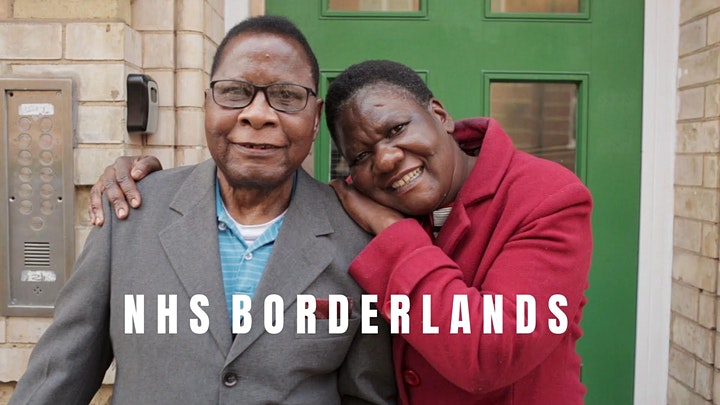
It included a screening of NHS Borderlands, an investigative documentary into the human cost of charging migrants for accessing the NHS, made by Bare Life Films. It features Angela who, after fleeing Zimbabwe in fear for her life, sought asylum in the UK where she has lived with her husband for 20 years. Following a vital hysterectomy operation Angela was – without warning – issued a bill for £8,000 by the NHS. Angela is not allowed to work and has no source of income and this bill jeopardizes her life in the UK forever. There are many stories like Angela’s, most untold and undocumented. This film shows how healthcare workers and campaigners are fighting alongside Angela to keep the border out of the NHS.

Continue reading

Tunnels, traffic and toxic air

Over the last few years I have become increasingly concerned about preventable death and disease from air pollution. As a Respiratory doctor, I worry for my patients living with asthma and COPD, but air pollution affects everyone of every age in London, and every organ of the body. Of course it doesn’t affect us all equally, as the poorest in the city contribute least but are affected most by the toxic air they are forced to breahe. Air pollution is a stark example of the social and health inequalities exacerbated by Climate change. Before the Mayoral elections, I and friends from MedAct made short films, showing the air pollution on our commutes from home to work.

I had hoped that Sadiq Khan, a mayoral candidate at the time, would be a strong advocate for Clean Air, and he has been, at least in words. But actions speak far louder, and disappointingly he has not cancelled the Silvertown Tunnel which will bring more toxic fumes to some of the most polluted communities in London.

Continue reading

Mutual aid

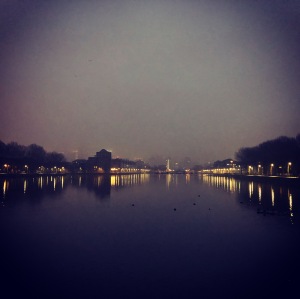
A view across Greenland Dock, London in teh early morning when is is dark, looking across at a misty view of Canary Wharf.

Joy is elusive this month. I leave home early and return after a long day in darkness. My sleep is broken and unrefreshing. My dreams are invaded by oxygen flow meters, masks, monitors, and breathless patients. I am tired, but that word is inadequate to describe the omnipresent fatigue that seeps into every cell of my body through the day, and which sleep fails to banish.


But there is hope. There is always hope. And right now it’s name is mutual aid.

Continue reading

An Unexpected Death

Death is part of life in hospital. Indeed, half of all deaths in England occur in these hives of activity, where we help many to evade the end for a little longer  [1]. Death is such a frequent part of our work in fact, that it can become routine. Last week a man died before we got to see him on our morning ward round. He died some time between having his breakfast and the 9am observations round. He was old, had been unwell for a long time, and his death was expected, although no-one predicted it would be that morning. It caused hardly a ripple. Nurses, doctors and physiotherapists exchanged surprised glances, then shrugged and immediately focused their attention on their next tasks. His death became an admin task, as the junior doctors planned when they would find the time to complete his death certificate, discharge summary, and paperwork for our departmental morbidity and mortality meeting.

Continue reading

At the margins

There is a great tradition of healthcare professionals working as volunteers, both at home and abroad, and this is highlighted and celebrated by the BMA Doctors as Volunteers competition. I entered a poster this year, and was very pleased to be chosen as one of the two winners. Euston foodbank, where I volunteer, will be putting the £850 prize money to good use, ensuring our foodbank is welcoming, and purchasing essential equipment and stock. 

Continue reading