Tunnels, traffic and toxic air

Over the last few years I have become increasingly concerned about preventable death and disease from air pollution. As a Respiratory doctor, I worry for my patients living with asthma and COPD, but air pollution affects everyone of every age in London, and every organ of the body. Of course it doesn’t affect us all equally, as the poorest in the city contribute least but are affected most by the toxic air they are forced to breahe. Air pollution is a stark example of the social and health inequalities exacerbated by Climate change. Before the Mayoral elections, I and friends from MedAct made short films, showing the air pollution on our commutes from home to work.

I had hoped that Sadiq Khan, a mayoral candidate at the time, would be a strong advocate for Clean Air, and he has been, at least in words. But actions speak far louder, and disappointingly he has not cancelled the Silvertown Tunnel which will bring more toxic fumes to some of the most polluted communities in London.

Continue reading →
Mutual aid

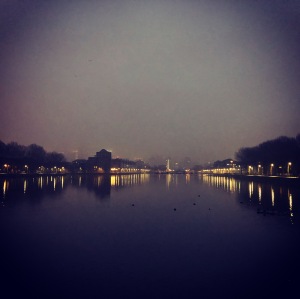
A view across Greenland Dock, London in teh early morning when is is dark, looking across at a misty view of Canary Wharf.

Joy is elusive this month. I leave home early and return after a long day in darkness. My sleep is broken and unrefreshing. My dreams are invaded by oxygen flow meters, masks, monitors, and breathless patients. I am tired, but that word is inadequate to describe the omnipresent fatigue that seeps into every cell of my body through the day, and which sleep fails to banish.


But there is hope. There is always hope. And right now it’s name is mutual aid.

Continue reading →

An Unexpected Death

Death is part of life in hospital. Indeed, half of all deaths in England occur in these hives of activity, where we help many to evade the end for a little longer  [1]. Death is such a frequent part of our work in fact, that it can become routine. Last week a man died before we got to see him on our morning ward round. He died some time between having his breakfast and the 9am observations round. He was old, had been unwell for a long time, and his death was expected, although no-one predicted it would be that morning. It caused hardly a ripple. Nurses, doctors and physiotherapists exchanged surprised glances, then shrugged and immediately focused their attention on their next tasks. His death became an admin task, as the junior doctors planned when they would find the time to complete his death certificate, discharge summary, and paperwork for our departmental morbidity and mortality meeting.

Continue reading →

At the margins

There is a great tradition of healthcare professionals working as volunteers, both at home and abroad, and this is highlighted and celebrated by the BMA Doctors as Volunteers competition. I entered a poster this year, and was very pleased to be chosen as one of the two winners. Euston foodbank, where I volunteer, will be putting the £850 prize money to good use, ensuring our foodbank is welcoming, and purchasing essential equipment and stock. 

Continue reading →

The professional is political

There is little hope in a recent piece on Respiratory Futures from Dr Phil Hammond. He paints a bleak picture of the NHS under the current Conservative government, and crystallises fears that many of us have that things will only get worse post-Brexit.

The NHS is more than a place we go to work: it is a community, a family. Attacks on our family feel personal and hurt deeply. What has disappointed me over the last few years is the lack of anger and action from our community. Doctors in particular seem to take pride in separating politics from professionalism. They refuse to speak up or get involved, maintaining a so called ‘neutral’ position.

Continue reading →

The Future is Red

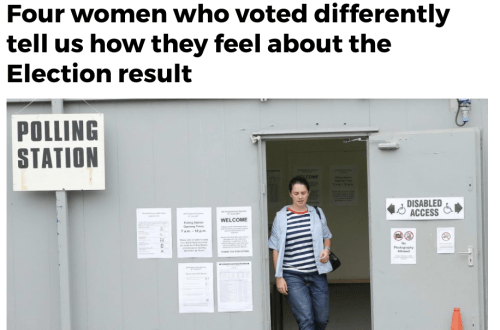
I spoke to Marie Claire magazine about my vote, and my response to the election result. You can read the full article, including three other women’s responses, here. Below is my section of the article.

Continue reading →

In the company of death

The Huffington Post have published an article I wrote on art and death. The edited version can be seen here. The original blog follows.

Continue reading →

Time to Live

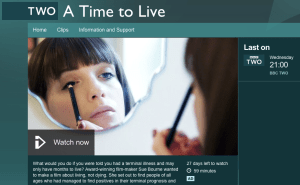
Last night I watched Time to Live from BBC2’s Life Stories series. Twelve people who have a terminal diagnosis share what they have learned about themselves and about life, knowing that it is short. They are people of all ages who have managed to find positives in their terminal prognosis and are making the most of the time they have left.

It is a fascinating, beautiful and uplifting, but also heartbreaking film. We can all learn something from these twelve people who live life with an intensity few of us experience, and who appreciate and celebrate the life they have.

Continue reading →

Relationship status update

I wrote the following as an entry for the Royal College of Physicians Teale Essay Prize 2017. The essay title was: How do trainees engage with the RCP and vice versa? – is this a case of a long distance relationship – how can we make this marriage work better? I did not win, but I am sharing here as a provocation. What should postgraduate education look like, and how do we get there?

Continue reading →

Death Cafe Euston

Join me for an evening of discussion on death, dying, life and living at 1 Lancing Street next to Euston station. There will be tea. There will be cake. There will be time and space to talk about death, dying, grief, funerals, and the fragility of life.

Death Cafes provide an opportunity ‘to increase awareness of death with a view to helping people make the most of their (finite) lives‘. They are group directed discussions with no agenda, objectives or themes. They are discussion groups rather than grief support or counselling sessions. They are generally life-affirming events, but sensitive discussions are of course possible so please bear this in mind. For more information please see www.deathcafe.com.

Continue reading →